Sustainable performance of organizations has seen the use of environmental, economic, and social issues in supply chain management. In this study, the authors explore the varied effects that internal and external Green Supply Chain Management (GSCM) practices have on the three dimensions of the Triple Bottom Line (TBL). Partial Least Squares Structural Equation Modeling (PLS-SEM) was utilized using survey data gathered by respondents at managerial level in manufacturing and construction industry to test hypothesized relationships and mediation effects. The results suggest that internal GSCM practices, including eco-design and green manufacturing, have a great impact on environmental performance and economic results, whilst using external practices, including supplier cooperation and reverse logistics, have a strong impact on social performance and stakeholder legitimacy. The relationship between GSCM practices and economic benefits is found to be partially mediated by environmental performance, and environmental efficiency has been identified to play strategy in maintaining long-term profitability. These gains notwithstanding, social performance is the least receptive dimension which denotes institutional inertia and measurement bias in emerging economies. The research offers a single, empirically tested framework of evaluating the effects of GSCM on all TBL dimensions and presents practical information to managers who want holistic sustainability.
Research ArticleSustainable Supply Chain ManagementIn progress
Environmental, Economic, and Social Outcomes of Green Supply Chain Practices
Correspondence: antara.sarkerdu@gmail.com
Abstract
Keywords Green Supply Chain ManagementTriple Bottom LineEnvironmental PerformanceEconomic PerformanceSocial Performance
1. Introduction
Business operations are under pressure to incorporate environmental, economic, and social considerations because the pace of environmental degradation around the globe is increasing, and regulatory forces are getting tighter and stakeholder activism is growing (Agyapong et al., 2023; Balon, 2020; Hidayat et al., 2022; Irum, 2024; Saini et al., 2023; Q. Zhang et al., 2017). Such trends compel a radical change in the traditional and profit-oriented models of supply chain management in favor of the models based on the Triple Bottom Line (TBL) framework (Appiah & Odartey, 2021; Waiyawuththanapoom et al., 2025). It is against this backdrop that Green Supply Chain Management (GSCM) has come out as a strategic response that seeks to inculcate environmental stewardship, economic viability, and social equity throughout all the supply chain processes, such as procurement, production, logistics and end-of-life management (Martínez & Mathiyazhagan, 2020; Saini et al., 2023; Waiyawuththanapoom et al., 2025). The United Nations Sustainable Development Goals (SDGs) and the Corporate Sustainability Reporting Directive (CSRD) of the European Union continue to support this shift by requiring integrated sustainability reporting and obliging companies to show quantifiable results on all three TBL layers, understanding their interdependence with each other (Yi et al., 2022).
Regardless of the growing academic and practical attention to GSCM, empirical data on its concomitant impact on environmental, economic, and social performance can be considered incomplete and inconclusive (Tronnebati & Jawab, 2024; Yan, 2024). Available meta-analyses indicate that there is a great heterogeneity in reported results owing mainly to concept ambiguity, methodological differences, and contextual variations across industries, regions and regulatory settings (Ahi & Searcy, 2013; Bhatia & Gangwani, 2021). One of the most ongoing issues is the lack of theoretical advancement and the inhomogeneity in measuring social performance results in GSCM studies (Kiet et al., 2024; Nguyen & Huynh, 2023). The social aspect in most studies is constituted of generalized concepts of corporate social responsibility (CSR), which are not specific enough to give a rigorous analysis at the supply chain level (Pedersen et al., 2023; Yi et al., 2022). This measurement and conceptual inexactitude blurs the causal link between GSCM practices and social outcomes, thereby limiting the design of evidence-based managerial strategies and policy interventions (Kiet et al., 2024).
In order to fill these gaps, the current analysis organizes GSCM practices into two separate internal and external dimensions and empirically looks at the two-fold differences in their consequences on environmental, economic and social performance (Agyapong et al., 2023; Saeed et al., 2018; Tantan & Akdağ, 2023; Yildiz Çankaya & Sezen, 2019). Internal GSCM practices include those practices carried out in the close control of the firm's operational control e.g. green manufacturing, green design and green internal environmental auditing (Khan et al., 2024; Tantan & Akdağ, 2023; Yildiz Çankaya & Sezen, 2019). Conversely, the external GSCM practices focus on inter-organizational cooperation, such as the selection of green suppliers, joint eco-innovative activities, and supplier development programs to guarantee environmental and social compliance (Al-Sheyadi et al., 2019; Green et al., 2012; Lin, 2013; Zhu et al., 2017).
By unravelling these internal and external processes, the study can be used to elaborate a more reasonable and empirically supported TBL evaluation framework of GSCM. It gives special attention to the development of theory and measurement concerning the social pillar by developing supply chain-related indicators in accordance with the international labor standards and applicable SDGs, which would allow viewing the role of GSCM in the holistic sustainability promotion more comprehensively (Kiet et al., 2024; Pedersen et al., 2023; Yi et al., 2022). This form of analysis brings out a greater understanding of how organizations can effectively navigate the dynamics of modern supply chains to not only ensure environmental sustainability, economic sustainability and social equity (Feng et al., 2024; Waiyawuththanapoom et al., 2025; D.
Zhang et al., 2024).
One of the core principles of GSCM, and thus the application of Life Cycle Assessment (LCA), is the analysis of overall environmental impacts of products and processes change throughout the product and process life-cycle, or the extraction of raw materials up to the end-of-life management (Li et al., 2022). LCA offers a stringent, quantitative and systematic paradigm that eliminates the risk of greenwashing through transparent and verifiable environmental performance assessment. Complementarily, Green Synthesis principles propose the concept of designing chemical products and processes to reduce or avoid hazardous substances, which facilitates GSCM goals by reducing waste and improving the efficiency of the chemical products and processes in the form of molecules.
The combination of LCA with Life Cycle Costing (LCC) and Social Life Cycle Assessment (S-LCA) into a more comprehensive Life Cycle Sustainability Assessment (LCSA) goes even further in the evaluation of not only economic and social aspects but also in line with the TBL paradigm. This broad-based approach is critically necessary, where low-carbon footprint products can be accompanied by labor practices that are exploitative and cost-effective processes can produce serious environmental or social externality. As a result, efficient GSCM demands constant appraisal and active governance with the primary emphasis on waste avoidance, efficient use of resources, and ongoing cooperation between the participants of the supply chain to realize truly sustainable and equal results (Fu et al., 2023; Liang et al., 2022; Pedersen et al., 2023; Saini et al., 2023).
2. Literature Review and Theoretical Framework
Theoretical underpinnings of the study of Green Supply Chain Management (GSCM) and its multidimensional performance implications are chiefly founded on three mutually supporting perspectives, namely, the Resource-Based View (RBV), the Institutional Theory, and the Stakeholder Theory (Agyapong et al., 2023). All of these theoretical lenses give a holistic explanation of how GSCM practices can be embraced and how they can produce environmental, economic, and social performance results.
Resource-Based View (RBV) argues that sustainable competitive advantage is a result of a firm that owns and exploits valuable, rare, inimitable, and non-substitutable resources and capabilities (Agyapong et al., 2023). Eco-design, green manufacturing, and sustainable sourcing among others are some of the practices within the GSCM environment that can be viewed as strategic capabilities that allow firms to make their operations more efficient, less expensive, and innovative about products and processes (Feng et al., 2024; Tronnebati & Jawab, 2024). To illustrate, the investment in the state-of-the-art environmental technologies or building a closed-loop and circular supply chain experience can draw a line between the countries and companies and bring long-term competitive advantages (Saini et al., 2023). In this light GSCM does not only serve as a generally compliance-oriented practice but a strategic process by which companies internalize the environmental concern to enhance economic performance (Yan, 2024).
In addition to the RBV, the Institutional Theory focuses on the factor of external pressure to influence the organizational behavior, in particular, the environmental and social responsibility (Agyapong et al., 2023). GSCM practices are often taken up by organizations due to internal gains of efficiency but also under the influence of institutional isomorphic pressures, viz. coercive, mimetic and normative forces, which are an outfall of the external environment of organizations (Agyapong et al., 2023; Irum, 2024). Coercive pressures are based on the governmental regulation, legal requirements, and the requirements of the industry which entail adherence to environmental and social norms (Saini et al., 2023). Mimetic pressures occur when companies imitate the effective sustainability policies of the industry leaders or competitors in the situation of uncertainty (Agyapong et al., 2023). The source of normative pressures is through professional associations, certification body and more societal expectations on responsible business practices (Irum, 2024; Saini et al., 2023). All these institutional drivers, together, affect the level and degree of GSCM adoption as companies pursue the legitimacy, regulatory appropriateness, and social acceptance (Agyapong et al., 2023).
The Stakeholder Theory also adds value to this analytical framework as it places strategic significance of managing relationships with various stakeholder groups that have expectations that may largely influence organizational performance (Irum, 2024). The main stakeholders, who are the customers, employees, suppliers, the local communities, non-governmental organizations (NGOs) and the investors, are increasingly insisting that firms should show evident environmental stewardship and social responsibility (Irum, 2024). As companies meet these expectations via open and accountable GSCM action, the company is capable of raising the status of corporate reputation, establishing trust with its stakeholders, and furthering the relational capital, hence leading to enhanced social and economic performances (Yan, 2024). On the contrary, the inability to address stakeholder issues can lead to the loss of reputation, boycotts by customers, regulatory controls, and market share losses (Irum, 2024).
The GSCM practices are mostly classified into internal and external dimensions, which are determined by the locus of implementation and management. Internal GSCM practices entail the activities that are carried out internally with the aim of mitigating the effects of the environment and enhancing resource efficiency. These are internal environmental management systems (including the ISO 14001 certification), eco-design of processes and products, prevention of pollution, reduction of waste, and energy efficiency programs (Saini et al., 2023; Yan, 2024). The main aim of internal GSCM is to facilitate better working performance, lower the expenses of wastage and emissions, and incorporate the aspect of environmental accountability into organizational practices and values (Feng et al., 2024). External GSCM practices, on the contrary, go beyond the directly operating activities of the firm to involve cooperation with the partners in the supply chain (Agyapong et al., 2023; Saini et al., 2023). These activities are green purchasing and supplier selection, collaborative eco-design with customers, reverse logistics and product take-back systems and environmental cooperation with suppliers and distributors (Agyapong et al., 2023; Saini et al., 2023). External GSCM is especially important to the management of the environmental and social effects throughout the entire product life cycle, wherein the extraction of raw materials up to end-of-life recovery and disposal of the products constituted (Tronnebati & Jawab, 2024).
The performance outcomes of GSCM adoption have a multidimensional nature as they are consistent with the principles of the Triple Bottom Line (TBL) approach (Tronnebati & Jawab, 2024; Yan, 2024). The results of green performance usually include the impairment of greenhouse gas emissions, garbage production, the use of dangerous substances, consumption of water, and the enhancement of the general efficiency of the resource (Agyapong et al., 2023; Yan, 2024). The well-being of the economy is typically measured in terms of cost reduction, profitability, improvement in sales, expansion of the market share and improvement in the competitive positioning (Tronnebati & Jawab, 2024; Yan, 2024). The elements of social performance, which have traditionally been less regularly discussed in the theoretical and empirical literature, are the health and safety of the workers, the working environment, fair labor practices, the welfare of the stakeholders, and the image and reputation of the corporation (Irum, 2024; Yan, 2024). The joint application of GSCM practices with the help of the insights of RBV, Institutional Theory, and Stakeholder Theory is likely to create synergistic changes in the environmental, economic, and social performance aspects, contributing to the overall sustainability of the organization in the long and enhanced welfare of the society (Tronnebati & Jawab, 2024).
3. Hypothesis Development
The practices of Green Supply Chain Management (GSCM) impact the organizational performance in terms of internal operation capacity and external relations with the supply chains. In line with the Resource-Based View and Institutional and Stakeholder perspectives, the paper identifies internal and external GSCM practices. It analyzes their impact on the Triple Bottom Line performance outcomes.
The practices of internal GSCM, which include eco-design, green manufacturing, and internal environmental management systems, increases efficiency of resources and minimize the environmental impacts in the operation of an organization. These add to environmental performance directly and bring economic gains in terms of cost-cutting and efficiency in operations.
H1: Internal GSCM practices are positively related to environmental and economic performance.
Other environmental practices of GSCM include green selection of suppliers, green collaboration, reverse logistics, which are external, and further expansion of sustainability activities throughout the supply chain. The practices assist in improving the environment at the system level as well as tackling the stakeholder expectations on social responsibility and compliance.
H2: External GSCM practices have positive implications on environmental and social performance.
Environmental performance is also projected to act as an important means whereby GSCM practices can be converted into long-term economic gains. The positive results of the environmental efficiency will decrease the risk of regulations, improve reputation, and competitive advantage in the long run.
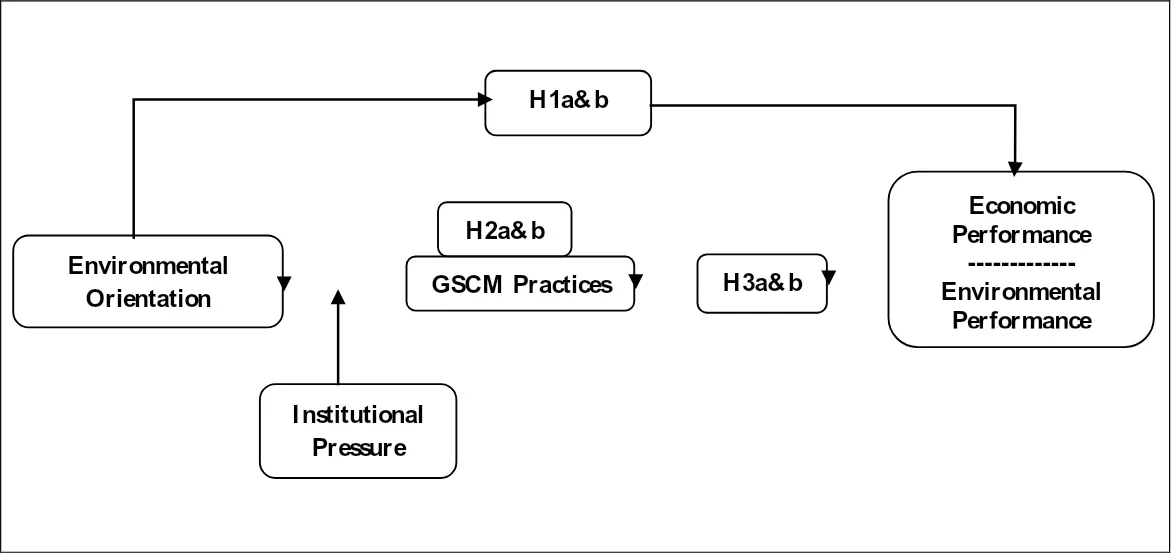
H3: GSCM practice and long-term economic performance are related through the effect of environmental performance.
4. Methodology
4.1 Research Design and Measurement
The research design used in this study was a quantitative, cross-sectional study design to empirically determine the relation between Green Supply Chain Management (GSCM) practices and the environmental, economic, and social performance outcomes. The main data collection tool was a structured questionnaire survey. The content validity and theoretical consistency were achieved by modifying the measurement items based on well-established and tested scales in the previous GSCM and sustainability research. Internal GSCM practices, external GSCM practices, environmental performance, economic performance, and social performance were operationalized as latent constructs, which were measured with a number of indicators. All questions were evaluated using a Likert-type scale, which enabled the respondents to refer to the magnitude of implementation and performance results in their organizations.
4.2 Sampling and Data Collection
The sample size was managerial-level professionals in the manufacturing and construction industries, where the supply chain operations are directly linked to the effects on the environment and social aspects. A purposive sampling method was used to select the respondents who have direct responsibility or involvement on decision-making of the supply chain management, operations, or sustainability issues. The implemented method was self-administered electronic surveys. In order to improve data quality and minimize the possibility of common method bias, anonymity and confidentiality were guaranteed to the respondents, and the design of the questionnaire adhered to the suggested procedural remedies.
4.3 Data Analysis
The data were analyzed using Partial Least Squares Structural Equation Modeling (PLS-SEM) because it is suitable in research that aims to predict complex relationships and mediate. The analysis was done in two steps. Firstly, the measurement model was tested by considering the reliability of indicators, internal consistency, convergent validity, and discriminant validity. Second, the structural model was evaluated to examine a set of hypothesized relationships between constructs, including the mediating effect of environmental performance. Direct and indirect effects were measured using bootstrapping, which resamples a large number of replications in order to assess the statistical significance.
5. Results
5.1 Measurement Model Evaluation
The measurement model was tested to have reliability and validity of measurement of all constructs. Cronbach's alpha (α) and composite reliability (CR) were used to measure internal consistency. All constructs met the recommended values (α > 0.70, CR > 0.70), which proved acceptable levels of reliability. The average variance extracted (AVE) was used to assess convergent validity and all the constructs met the 0.50 threshold. The Fornell-Larcker criterion and the Heterotrait in Monotrait (HTMT) ratio were used to measure the discriminant validity, and both criteria showed that constructs were sufficiently differentiated (HTMT < 0.85).
Table 1. Measurement Model Statistics
| Construct | Items | Cronbach’s α | Composite Reliability (CR) | AVE |
|---|---|---|---|---|
| Internal GSCM | 5 | 0.841 | 0.892 | 0.624 |
| External GSCM | 5 | 0.835 | 0.885 | 0.611 |
| Environmental Performance | 4 | 0.858 | 0.904 | 0.659 |
| Economic Performance | 4 | 0.844 | 0.891 | 0.643 |
| Social Performance | 4 | 0.826 | 0.879 | 0.608 |
The findings show that all constructs are very reliable and convergent in terms of validity and this is how the measurement model can be used in the structural analysis.
5.2 Structural Model Assessment
Hypothesized relationships were tested with the PLS-SEM to assess the model structural. Path coefficients (β), significance (t-values and p-values through bootstrapping), and explanatory power (R2) were tested.
Table 2. Structural Model Results
| Hypothesis | Path | β | t-value | p-value | Result |
|---|---|---|---|---|---|
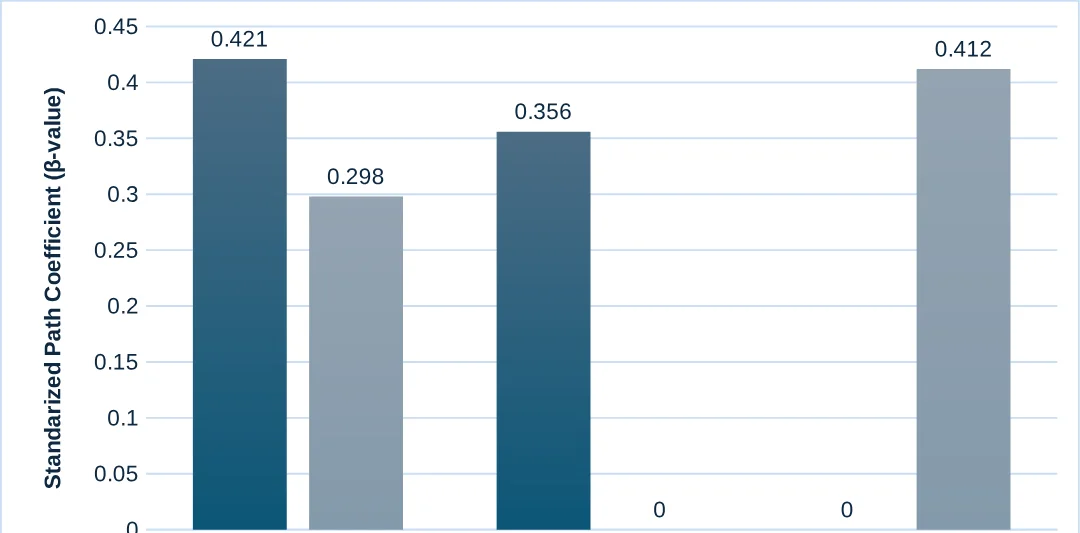
| H1 | Internal GSCM to Environmental | 0.421 | 6.32 | <0.001 | Supported |
| H1 | Internal GSCM to Economic | 0.356 | 5.14 | <0.001 | Supported |
| H2 | External GSCM to Environmental | 0.298 | 4.02 | <0.001 | Supported |
| H2 | External GSCM to Social | 0.412 | 6.18 | <0.001 | Supported |
| H3 | Environmental to Economic | 0.271 | 4.57 | <0.001 | Supported |
| H3 | Indirect effect (GSCM → Environmental → Economic) | 0.114 | 3.01 | 0.003 | Supported |
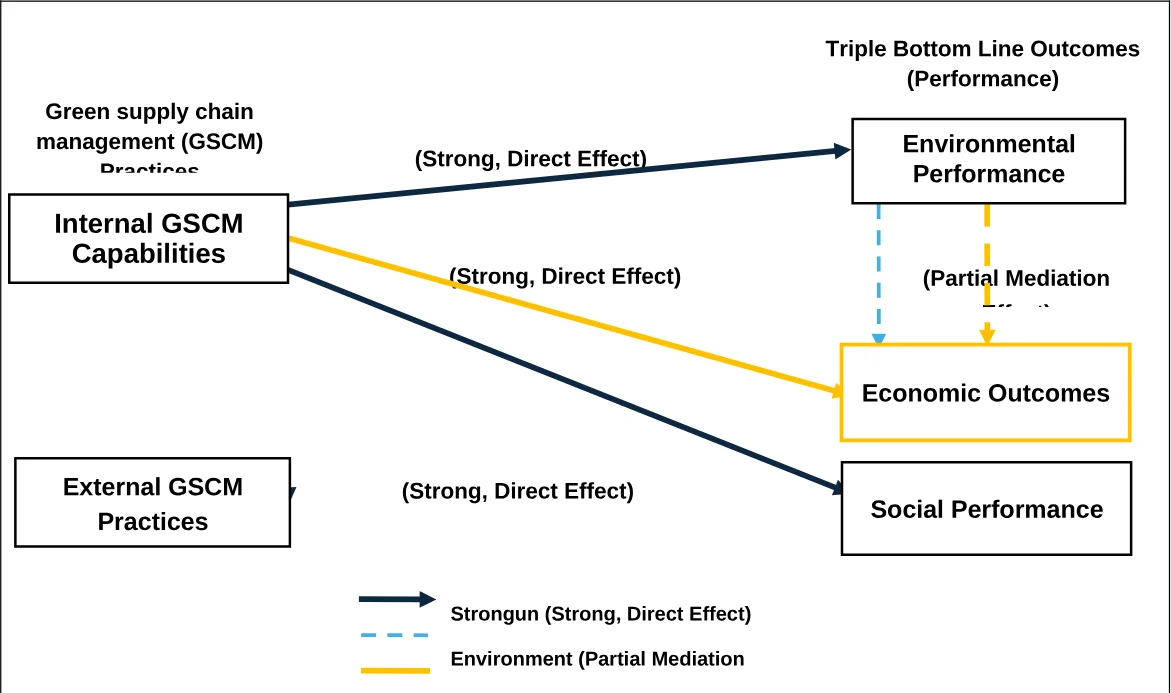
The results show that the positive effect of internal Green Supply Chain Management (GSCM) practices on environmental performance (β = 0.421, p < 0.001) and eco-design and green manufacturing practices are also positively associated in contributing to the economic performance (β = 0.356, p < 0.001). The practices of the GSCM of an external nature, in its turn, has a pivotal positive impact on the environmental performance (β = 0.298, p < 0.001) and social outcomes (β = 0.412, p < 0.001), which highlights the importance of the suppliers' collaboration and reverse logistics program in stimulating the results of sustainability. Besides, the environmental performance was also identified to mediate the relation between the GSCM practices and the economic outcomes (indirect effect = 0.114, p = 0.003), showing that internal and external GSCM practices not only have a direct effect on the economic outcome but also an indirect effect in terms of the gains in environmental efficiency.
Table 3. R² Values for Endogenous Constructs
| Construct | R² | Interpretation |
|---|---|---|
| Environmental Performance | 0.472 | Moderate explanatory power of GSCM practices |
| Economic Performance | 0.389 | Substantial portion explained by GSCM & Environmental |
| Social Performance | 0.425 | Moderate influence of external GSCM practices |
The values of R² show that the model accounts for a significant amount of variance of environmental, economic, and social performance, as TBL suggests and earlier GSCM literature implies.
5.3 Key Empirical Patterns
Internal vs External GSCM: Internal practices are the most effective in influencing the environmental and economic performance, and external practices are the ones that mostly contribute to social performance.
Synergistic Effects: There are synergistic benefits of environmental performance, wherein the strategic value of sustainability towards long-run competitiveness is contained in environmental performance.
Eco-Design and Supplier Collaboration: Eco-design and internal audits were the internal practices that had the most influence on each dimension. Supplier collaboration and reverse logistics are the two external practices that had the greatest impact on enhancing social outcomes.
These findings substantiate the earlier claim that an integrated strategy, which focuses on both in-house strengths and outsourcing, is vital in realizing comprehensive sustainable outcomes. The results are consistent with the RBV, Institutional, and Stakeholder theoretical predictions and empirically supported to prove integrated TBL advantages of the GSCM adoption.
6. Discussion
6.1 Interpretation of Findings
The findings of this study show that the practices of Green Supply Chain Management (GSCM) have varied impacts on both environmental, economic, and social performance, which validate theorized correlations and point to subtle performance dynamics.
As the current literature on the Resource Based View (RBV) and empirical findings suggest, internal GSCM competences including eco design, green manufacturing, and internal environmental management have a great impact on environmental performance and economic gains (e.g., by decreased resource consumption and operation expenses). This result is consistent with the recent research asserting that internal environment practices assist companies in internalizing eco-related capabilities, which can be converted into practical competitive benefits (e.g., increased eco efficiency and innovation) (Balon, 2020; Loviscek, 2021; Waiyawuththanapoom et al., 2025).
Besides this, the external GSCM practices (such as green selection of suppliers, collaborative design, and reverse logistics) were closely connected with social performance improvements as the effect of institutional and stakeholder pressure. The conclusions are consistent with recent empirical literature that has indicated that the engagement of suppliers, collaboration between stakeholders, and more comprehensive inter organizational green activities are significant in promoting corporate social results (Alkandi et al., 2024; Feng et al., 2024).
Despite the strong performance of environmental and economic performance, the short term economic benefits were relatively limited, probably because of start-up costs of investments and training (e.g., investing in environmental technologies and training). This observation is part of studies in the emerging markets that have found economic recompense of GSCM lagging behind in the early stages of investment payoff (Rupa & Saif, 2022).
The mediation analysis affirmed that the relationship between GSCM practices and economic performance is partly mediated by the environmental performance. It is an implication that environmental benefits like reduction of emissions and resource efficiency are just required channels through which more general benefits of the economy can be achieved in a sustainable setting, a trend that is highlighted in recent literature on lifecycle and sustainability integration.
Figure 2 shows that the major pathways in the model are those that have stronger direct impact of internal GSCM on environmental and economic performance, and external GSCM on social performance.
6.2 The Social Performance Gap
Despite the importance, social performance effects were the least pronounced out of the three performance dimensions. This social performance gap is reflective of an overall trend in recent GSCM studies that have continually indicated more empirical negligence of social outcomes, relative to environmental and economic returns, especially in emerging economy settings (e.g., Pakistani textile companies, Saudi industrial SMEs) (Al-Sheyadi et al., 2019; Saeed et al., 2018).
The less responsive nature of social performance may indicate:
To measure social results in the management of supply chains, there are a number of challenges. Fair labor practices, community well-being, and stakeholder trust are social performance indicators that are multidimensional in nature and not standardized in supply chain research, which diminishes construct clarity and predictive power. Also, institutional barriers such as weaker regulatory enforcement, lower incentives, and stakeholder pressure are common in firms in emerging economies, and thus the implementation of socially oriented GSCM practices are not as eminent as environmental or economic ones. Moreover, social performance can often take longer time-horizons to become better, such as cultural change or workforce development, which may not be adequately reflected in cross-sectional studies, and hence underestimate the actual effect of such a study.
Combined, these aspects can be used to explain why social performance indicators are less reactive than environmental or economic ones, and indicate a gap that still persists and is reflected in the literature.
Table 4. Summary of Standardized Effects on Performance Dimensions
| Performance Dimension | Internal GSCM | External GSCM | Mediated Economic Effect |
|---|---|---|---|
| Environmental | Strong | Moderate | |
| Economic | Moderate | Weak | Moderate |
| Social | Weak | Strong |
Note: Effects represent relative magnitudes of standardized path coefficients.
Table 4 provides an overview of the mean standardized effects of this study that support the relative power of internal GSCM practices on environmental and economic performance and the somewhat low level of impact on social performance.
6.3 Theoretical and Practical Implications
Theoretically, the study contributes to the synthesis between RBV, Institutional Theory, and Stakeholder Theory in describing the results of GSCM. It provides empirical information that:
Environmental and economic gains are mainly caused by internal capabilities.
The external collaborations are particularly applicable in social performance.
Environmental performance is a tool that relates sustainability practices with economic gains.
This integrative way of thinking responds to the recent demand in the literature to multi-dimensional performance measurement based on holistic approaches like TBL and lifecycle thinking.
In practical terms, the results would suggest that managers who are interested in the holistic sustainability should strike a balance between internal investments and external supply chain participation and develop social performance indicators based on the context of the functioning. Incentives that enhance the social outcome drivers in GSCM, particularly in emerging economies, ought to be considered by policymakers as well.
6.4 Limitations and Future Research
Although this research study offers sound information, its cross-sectional nature restricts causal inferences and time-based interpretation of the effects of performance. The future studies should embrace longitudinal designs to define the long-term social performance changes. Also adding additional moderating variables, including institutional quality, firm size and regulatory environments, can further enhance the knowledge on when and how social results are being produced through GSCM practices.
7. Conclusion and Implications
7.1 Theoretical Contributions
This study contributes to theoretical insight in the domain of Green Supply Chain Management (GSCM) by merging internal and external practices into one framework and empirically investigating their effects on all three aspects of the Triple Bottom Line (TBL) that are environmental, economic, and social performance. Through the social performance as a marginal fact that used to be viewed in the context of the previous studies, as the environment or economic effects of the GSCM are a primary factor, the given study offers an integrated assessment of the impacts of the given concept, which proves that social performance can be discussed as a systematic issue requiring external cooperation and involvement of the stakeholders.
The results are the extension of the Resource-Based View (RBV) that establishes internal GSCM capabilities, including the eco-design of the products, green manufacturing, and environmental auditing, as firm-specific resource, which increase operational efficiency, minimize environmental effects, and provide economic competitiveness. These in-house strengths are not only important in realizing environmental benefits but also create long run economic benefit, which points to the strategic importance of sustainability as a competency.
Moreover, the research contributes to the development of the Institutional Theory by demonstrating that the external pressures, which are influencing the implementation of GSCM practices, especially social responsibility are coercive, normative, and mimetic. The fact proves the notion that external GSCM practices, such as supplier cooperation, reverse logistics, and social compliance initiatives, can assist companies in achieving legitimacy, enhanced stakeholder trust, and enhanced social performance results.
Lastly, the incorporation of the Stakeholder Theory strengthens the significance of relations management with a large range of actors, such as suppliers, customers, employees, investors, and local communities. The findings indicate that the met expectations of the stakeholders by implementing intentional GSCM initiatives will lead to better social performance, corporate image, and long-term organizational performance. The combination of such contributions gives a holistic theoretical approach to the assessment of GSCM practices, indicating the differentiated, but supplementary roles of internal capabilities and external collaborations in the TBL.
7.2 Managerial Implications
In the managerial perspective, the findings provide a concise indication on how to design and adopt effective GSCM strategies. To begin with, managers are advised to focus more on the internal environmental capabilities as a basis of sustainability. Eco-design, green manufacturing, pollution prevention, internal environmental audits and similar practices are not only more efficient in terms of operations but also cost-saving initiatives, including the waste, emissions, and resource-consumption. It is important to promote more comprehensive sustainability across the supply chain by establishing good internal capabilities.
Second, to attain social and environmental performance, the external cooperation with the suppliers, customers, and other interested parties should be strategically taken advantage of. A solution to the stakeholder expectations, the improvement of the social legitimacy, and the establishment of a more durable partnership may be seen through engaging suppliers in sustainable sourcing, co-creating environmentally-friendly products, and using the reverse logistics systems. This confirms that the social and environmental benefits would not be realised unilaterally but there has to be collective supply chain intervention.
Third, the managers must not perceive GSCM as a short-term operational cost and instead it is a long-term strategic investment. The short term profits may be limited temporarily by the initial investment on environmental technologies, involvement of suppliers and social compliance programs, which leads to long term environmental, economic and social paybacks. To ensure the highest level of impact, the organizations are advised to use integrated monitoring systems to measure every dimension of TBL such as social indicators and regularly compare the performance with the strategic objectives.
Lastly, the results indicate that managers working in emerging economies would need to contextualize social performance initiatives to take note of the institutional and regulatory environments. Localization of social compliance programs to local standards of labor, local expectations and cultural norms can enhance compliance, and assist firms to surmount contextual conditions that typically constrain social impact.
7.3 Limitations and Future Research
This study has a number of limitations that are worth considering in future studies in spite of its contributions. To start with, cross-section design does not allow making a causal conclusion and understanding of long-term dynamics in GSCM performance. The longitudinal studies might help shed light on how internal and external practices affect TBL outcomes over time and give more account of the delayed social impacts.
Second, the manufacturing and construction industries are the main areas of the study since the environmental and social pressure are acute in them. The future studies might apply this framework to service, technology, or high value-added industries to determine whether the same tendencies are applicable in other settings.
Third, moderating factors which could be effective in determining the strength of GSCM-performance relationship are not explicitly tested in the study. Regulatory stringency, firm size, supply chain complexity and organizational culture may precondition the effectiveness of the internal and external practices and are to be included in the future models.
Lastly, the research focuses on the new role played by digital technologies in improving the outcomes of GSCM. Artificial intelligence, blockchain, IoT-based monitoring, and analytics based on big data can be used to optimize the allocation of resources, enhance transparency, and increase environmental and social performance. Further studies are needed on how digital innovation can be used in combating GSCM practices to produce TBL results and how technology-based processes can be used to improve performance.
7.4 Concluding Remarks
Overall, this study highlights the fact that holistic sustainability is only possible when there is a balanced approach between the internal skills and external partnerships. The internal GSCM practices lead to environmental efficiency and economic performance, whereas external practices are especially aimed at enhancing social outcome and achieving stakeholder legitimacy. The managers are advised to take the approach of strategic, long term approach to GSCM in which they invest in both the internal process capabilities and the outside stakeholders engagement in order to be able to maximize the triple bottom line. This study will make a contribution to theory, managerial decision making, and provide a basis upon which future research can be carried out to explore sustainable supply chain practices.
Reference
Agyapong, A., Aidoo, S. O., Acquaah, M., & Akomea, S. (2023). Environmental orientation and sustainability performance; the mediated moderation effects of green supply chain management practices and institutional pressure. Journal of Cleaner Production, 430, 139592. https://doi.org/10.1016/j.jclepro.2023.139592
Ahi, P., & Searcy, C. (2013). A comparative literature analysis of definitions for green and sustainable supply chain management. Journal of Cleaner Production, 52, 329–341. https://doi.org/10.1016/j.jclepro.2013.02.018
Alkandi, I., Alhajri, N., & Alnajim, A. (2024). Green Supply Chain Management, Business Performance, and Future Challenges: Evidence from Emerging Industrial Sector. Sustainability, 17(1), 29. https://doi.org/10.3390/su17010029
Al-Sheyadi, A., Muyldermans, L., & Kauppi, K. (2019). The complementarity of green supply chain management practices and the impact on environmental performance. Journal of Environmental Management, 242, 186–198. https://doi.org/10.1016/j.jenvman.2019.04.078
Appiah, L. O., & Odartey, M. (2021). Green Supply Chain Management and Firm Performance: Evidence from Ghana’s Food Production and Processing Industry. International Journal of Business Strategy and Social Sciences, 4(1), 29–42. https://doi.org/10.18488/journal.171.2021.41.29.42
Balon, V. (2020). Green supply chain management: Pressures, practices, and performance—An integrative literature review. Business Strategy & Development, 3(2), 226–244. https://doi.org/10.1002/bsd2.91
Bhatia, M. S., & Gangwani, K. K. (2021). Green supply chain management: Scientometric review and analysis of empirical research. Journal of Cleaner Production, 284, 124722. https://doi.org/10.1016/j.jclepro.2020.124722
Feng, T., Qamruzzaman, M., Sharmin, S. S., & Karim, S. (2024). Bridging Environmental Sustainability and Organizational Performance: The Role of Green Supply Chain Management in the Manufacturing Industry. Sustainability, 16(14), 5918. https://doi.org/10.3390/su16145918
Fu, C., Liu, Y.-Q., & Shan, M. (2023). Drivers of low-carbon practices in green supply chain management in construction industry: An empirical study in China. Journal of Cleaner Production, 428, 139497. https://doi.org/10.1016/j.jclepro.2023.139497
Green, K. W., Zelbst, P. J., Meacham, J., & Bhadauria, V. S. (2012). Green supply chain management practices: Impact on performance. Supply Chain Management: An International Journal, 17(3), 290–305. https://doi.org/10.1108/13598541211227126
Hidayat, R., Crefioza, O., Kusuma, P. D., Habiibii, Y. S., Nur Fitria, R., Nungkiastuti, F. D., & Rezqa Afifi, F. (2022). A Conceptual Model of Green Supply Chain Management Effects on Firm Performance. IPTEK Journal of Proceedings Series, 0(1), 469. https://doi.org/10.12962/j23546026.y2020i1.11951
Irum, F. (2024). Green Supply Chain Management and Sustainability: A Proposed Model of Stakeholder Pressure. Digital Management Sciences Journal, 1(2), 132–142. https://doi.org/10.62854/dmsj.v1i2.25
Khan, T., Ali, A., Khattak, M. S., Arfeen, M. I., Chaudhary, M. A. I., & Syed, A. (2024). Green supply chain management practices and sustainable organizational performance in construction organizations. Cogent Business & Management, 11(1), 2331990. https://doi.org/10.1080/23311975.2024.2331990
Kiet, H. V. T. T., Sang, M. V., Truc, T. B., Lan, T. K. N., Dinh, H. Q., & Dao, P. T. B. (2024). Impact of green supply chain management on social performance through economic undergraduate’s view. Journal of Infrastructure Policy and Development, 8(3), 3075. https://doi.org/10.24294/jipd.v8i3.3075
Li, Z., Lin, G., Wang, H., Zhao, Y., & Chen, T. (2022). Constructing carbon sink-oriented waste management system towards reduction and maximum recovery via high-precision packaging waste inventory. Resources, Conservation and Recycling, 184, 106412. https://doi.org/10.1016/j.resconrec.2022.106412
Liang, C., Yin, Z., Sun, Y., Xu, Y., Yao, K., Liu, Z., & Zhu, M. (2022). Pyrolysis of waste Fischer-Tropsch wax: An experimental study. Journal of Cleaner Production, 350, 131529. https://doi.org/10.1016/j.jclepro.2022.131529
Lin, R.-J. (2013). Using fuzzy DEMATEL to evaluate the green supply chain management practices. Journal of Cleaner Production, 40, 32–39. https://doi.org/10.1016/j.jclepro.2011.06.010
Loviscek, V. (2021). Triple Bottom Line toward a Holistic Framework for Sustainability: A Systematic Review. Revista de Administração Contemporânea, 25(3), e200017. https://doi.org/10.1590/1982-7849rac2021200017.en
Martínez, J., & Mathiyazhagan, K. (2020). Green Supply Chain Management: Evolution of the Concept, Practices and Trends. In H. Kumar & P. K. Jain (Eds.), Recent Advances in Mechanical Engineering (pp. 47–56). Springer Singapore. https://doi.org/10.1007/978-981-15-1071-7_5
Nguyen, H. D., & Huynh, V. P. (2023). Understanding of Economic Student on the Relationship between Green Supply Chain Management and Sustainability. Global Conference on Business and Social Sciences Proceeding, 15(1), 83–83. https://doi.org/10.35609/gcbssproceeding.2023.1(83)
Pedersen, S., Clausen, C., & Jørgensen, M. S. (2023). Navigating value networks to co‐create sustainable business models: An actionable staging approach. Business Strategy and the Environment, 32(1), 240–258. https://doi.org/10.1002/bse.3127
Rupa, R. A., & Saif, A. N. M. (2022). Impact of Green Supply Chain Management (GSCM) on Business Performance and Environmental Sustainability: Case of a Developing Country. Business Perspectives and Research, 10(1), 140–163. https://doi.org/10.1177/2278533720983089
Saeed, A., Jun, Y., Nubuor, S. A., Priyankara, H. P. R., & Jayasuriya, M. P. F. (2018). Institutional Pressures, Green Supply Chain Management Practices on Environmental and Economic Performance: A Two Theory View. Sustainability, 10(5), 1517. https://doi.org/10.3390/su10051517
Saini, N., Malik, K., & Sharma, S. (2023). Transformation of Supply Chain Management to Green Supply Chain Management: Certain investigations for research and applications. Cleaner Materials, 7, 100172. https://doi.org/10.1016/j.clema.2023.100172
Tantan, M., & Akdağ, H. C. (2023). The Effect of Green Supply Chain Management Practices on the Sustainability Performance of Turkish Shipyards. Sustainability, 15(8), 6677. https://doi.org/10.3390/su15086677
Tronnebati, I., & Jawab, F. (2024). The impact of green and sustainable supply chain management practices on sustainable performance: A comparative analysis. International Journal of Logistics Systems and Management, 47(3), 267–294. https://doi.org/10.1504/IJLSM.2024.136855
Waiyawuththanapoom, P., Aunyawong, W., Muedkhuntod, S., & Legino, R. (2025). A Conceptual Review of Green Supply Chain Management Practices and their Impact on Organizational, Environmental, and Economic Performance. Journal of Advanced Research in Business and Management Studies, 39(1), 53–60. https://doi.org/10.37934/arbms.39.1.5360
Yan, Y. (2024). The Multidimensional Impact of Green Supply Chain Management on Economic, Environmental, and Social Performance. Proceedings of the 5th International Conference on Artificial Intelligence and Computer Engineering, 541–546. https://doi.org/10.1145/3716895.3716991
Yi, L., Li, T., Wang, X., Ge, G., & Zhang, T. (2022). Corporate social responsibility performance evaluation from the perspective of stakeholder heterogeneity based on fuzzy analytical hierarchy process integrated TOPSIS. Corporate Social Responsibility and Environmental Management, 29(4), 918–935. https://doi.org/10.1002/csr.2245
Yildiz Çankaya, S., & Sezen, B. (2019). Effects of green supply chain management practices on sustainability performance. Journal of Manufacturing Technology Management, 30(1), 98–121. https://doi.org/10.1108/JMTM-03-2018-0099
Zhang, D., Shi, L., & Liu, G. (2024). Supply chain in transition navigating economic growth and environmental sustainability through education. Environmental Science and Pollution Research, 31(8), 12321–12339. https://doi.org/10.1007/s11356-024-31856-7
Zhang, Q., Ma, H., Weng, L., & Cao, M. (2017). Drivers and consequences of Green supply chain management: An empirical examination. 2017 International Conference on Service Systems and Service Management, 1–6. https://doi.org/10.1109/ICSSSM.2017.7996161
Zhu, Q., Feng, Y., & Choi, S.-B. (2017). The role of customer relational governance in environmental and economic performance improvement through green supply chain management. Journal of Cleaner Production, 155, 46–53. https://doi.org/10.1016/j.jclepro.2016.02.124
CITE THIS ARTICLE
Sarker, A. (2026). Environmental, Economic, and Social Outcomes of Green Supply Chain Practices. https://www.researchbyantara.com/article/d9f5ea84-dde7-4471-865c-e717e142bf22
A. Sarker, “Environmental, Economic, and Social Outcomes of Green Supply Chain Practices,” 2026. [Online]. Available: https://www.researchbyantara.com/article/d9f5ea84-dde7-4471-865c-e717e142bf22
Sarker, A. (2026) ‘Environmental, Economic, and Social Outcomes of Green Supply Chain Practices’. Available at: https://www.researchbyantara.com/article/d9f5ea84-dde7-4471-865c-e717e142bf22
Sarker, Antara. “Environmental, Economic, and Social Outcomes of Green Supply Chain Practices.” 2026, https://www.researchbyantara.com/article/d9f5ea84-dde7-4471-865c-e717e142bf22.
Antara Sarker. “Environmental, Economic, and Social Outcomes of Green Supply Chain Practices.” (2026). https://www.researchbyantara.com/article/d9f5ea84-dde7-4471-865c-e717e142bf22.
Sarker A. Environmental, Economic, and Social Outcomes of Green Supply Chain Practices. 2026. https://www.researchbyantara.com/article/d9f5ea84-dde7-4471-865c-e717e142bf22
@misc{article_d9f5ea84dde74471865ce717e142bf22,
  title = {Environmental, Economic, and Social Outcomes of Green Supply Chain Practices},
  author = {Antara Sarker},
  year = {2026},
  url = {https://www.researchbyantara.com/article/d9f5ea84-dde7-4471-865c-e717e142bf22},
}
TY - GEN AU - Antara Sarker TI - Environmental, Economic, and Social Outcomes of Green Supply Chain Practices PY - 2026 UR - https://www.researchbyantara.com/article/d9f5ea84-dde7-4471-865c-e717e142bf22 ER -