Certain global disruptions have become more frequent and severe, which has demonstrated the weaknesses of efficiency-based supply chains as well as the necessity of adaptive resilience. This paper evaluates the operationalization of resilience by supply chain in the context of disruption and explores the facilitating functions of digital transformation and leadership in a dynamic capabilities and viability-based framework. The study uses a mixed-method design that combines the Partial Least Squares Structural Equation Modeling (PLS-SEM) and fuzzy-set Qualitative Comparative Analysis (fsQCA) based on a survey data set of senior supply chain managers. The findings of the PLS-SEM suggest that any disruption in the world has an adverse impact on the supply chain performance and that supply chain agility has a positive impact on resiliency and mediates the effects of disruption to some extent. The ability of agility to respond to disruptions is greatly enhanced by digital transformation and ameliorated by crisis-focused and transformational leadership, which alleviates the negative effect of disruptions on agility. The supplementary findings of the fsQCA indicate that there are several possible configurational routes to high supply chain resilience, showing that a single capability or strategy cannot be assumed to be enough in all situations. The combination of strategic redundancy together with agility, leadership, and digital maturity has become a survival strategy despite the underlying cost-resilience trade-offs. The work has made a contribution to the literature as it applied the dynamic capabilities theory to large-scale disruption settings and proposed a viability-oriented logic of resilience, which incorporates the aspects of agility, resilience, and sustainability. The results can be used by managers and policymakers to develop supply chains that can perform sustainably in volatile, uncertain, complex, and ambiguous environments.
Research ArticleSupply Chain ManagementPublished
Building Resilient and Agile Supply Chains under Global Disruptions
Correspondence: antara.sarkerdu@gmail.com
Abstract
Keywords Supply Chain ResilienceSupply Chain AgilityDynamic CapabilitiesDigital TransformationGlobal Disruptions
1. Introduction
The growing trend of systematic global shocks, such as the COVID-19 pandemic, geopolitical conflicts, including the Russia-Ukraine war, and heightening trade tensions, has revealed the structural vulnerability of supply chains that have traditionally been streamlined to be efficient on such paradigms as Just-in-Time (JIT) and lean manufacturing (Grzybowska & Tubis, 2022). This is because these models were effective in offering cost efficiency and speed in stable conditions, but recent crises have revealed their frailty in volatile, uncertain, complex, and ambiguous (VUCA) environments, where tightly coupled and buffer-free systems can hardly maintain performance (Cheng et al., 2025; Grzybowska & Tubis, 2022). This has meant that numerous organizations continue to live in the cycle of reactivity, where they use short-term solutions or disjointed digital solutions that are not integrated at a strategic level to enable the creation of long-term adaptive resilience (Kähkönen et al., 2023; Napier et al., 2024).
The adaptive resilience, or the capacity to anticipate, absorb, restructure, and learn through the disruption instead of going back to the pre-shock equilibrium has become one of the most important organizational capabilities in this context (Napier et al., 2024; Pedersen et al., 2023). Nevertheless, even with the increasing academic interest, there are still large gaps in the understanding of how resilience is institutionalized via supply chain agility, how the digital transformation reinforces or predetermines this link, and how leadership practices and redundancy forms co-determine the performance of firms in different disruption levels (Aslam et al., 2020; Singh & Modgil, 2025). Specifically, the lack of integrative models that are empirically based such that the operational capabilities at the micro level and macro-level disruption processes relate helps to restrict theoretical development and managerial practice.
This analytical summary can fill these gaps by looking at the interdependence between supply chain agility, digital transformation, leadership, and redundancy in promoting supply chain resilience. The study will in particular (i) study supply chain agility as a fundamental process by which resilience is achieved, (ii) measure digital transformation as a moderating capability and enabling capability that increases the agility-resilience relationship, and (iii) determine which leadership styles and redundancy setups can promote organizational performance across various disruption regimes (Dubey et al., 2024; Wu et al., 2024). In theory, the study takes the dynamic capabilities approach, combining the concept of Anticipation-Adaptation-Absorption (AAA) framework and agility as a micro-foundation of resilience to merit macro-level disruption theory and operational practice at the firm level (Legg et al., 2025; Pu et al., 2023).
The notion of supply chain resilience (SCRE) has become more visible over the last twenty years as companies are trying to survive and recuperate more disruptive events that are becoming more frequent and severe (Nikookar et al., 2024). Despite the importance of resilience that is recognized in the existing literature, the details of how supply chains acquire resilient attributes are poorly understood (Nikookar et al., 2024). One of the conceptualizations of SCRE is that SCRE is represented by three dimensions that are interrelated; they are robustness, adaptability, and transformability. Robustness implies the ability to absorb shocks with the help of already existing structures, including safety stock or alternative transportation routes, without any major changes in the way the operations are carried out. Adaptability entails conscious short- to medium-term changes by redistribution of resources and reconfiguring processes. Transformability refers to the capacity to radically re-design supply chain frameworks in reaction to incessant change in the environment.
The move toward global disruptions has seen the transition away with the efficient-focused models like JIT to more resilient ones with increased speed (Grzybowska & Tubis, 2022). Extreme focus on efficiency will usually reduce redundancies and buffers at the expense of making the system susceptible to cascading failures in the circumstances where unforeseen events happen. The COVID-19 pandemic, specifically, revealed the vulnerability of lean supply chains and highlighted the need to have more responsive resources in purchasing and supply management (PSM) functions (Kähkönen & Patrucco, 2022; Ruamchart, 2023). Empirical data also show that the ability to respond quickly, make decisions fast, and reconfigure resources helped companies to be more suited to deal with the disruptive impacts of the pandemic (Kähkönen et al., 2023).
In this context, agility in supply chains (SCA) has become a key driver of residience so that the companies are able to react quickly and efficiently to the abrupt changes in the environment (Aslam et al., 2020; Legg et al., 2025; Singh & Modgil, 2025). Agility can include the notions of flexibility, responsiveness, and strategic performance, especially when faced with the crisis conditions (Hasanein et al., 2026; Kazancoglu et al., 2022). An example is in the furniture industry where it has been proven that supply chain agility has played a leading role in improving resilience and sustainability in terms of performance in the COVID-19 pandemic (Pratondo et al., 2021). In a broader sense, agility helps firms to take the initiative in handling risk and at the same time take advantage of opportunities created due to environment uncertainty(Hsieh et al., 2023).
Digital transformation is critical and contributes towards reinforcement of supply chain agility and resilience. Digital technologies, such as artificial intelligence (AI), blockchain, cloud computing, and big data analytics, increase the visibility of the supply chain, coordination, and decision-making and protect performance in both stable and turbulent environments (Fan et al., 2025; Wu et al., 2024). The digitalization of data network effects is especially significant in enabling agility in interconnected supply chain networks (Wu et al., 2024). Big data analytics that have been analysed by approaches like Partial Least Squares Structural Equation Modeling (PLS-SEM) and fuzzy-set Qualitative Comparative Analysis (fsQCA) has been established to enable accurate and responsive delivery in industries like food supply chains, resulting in ideal operational performance (Ma et al., 2025).
Leadership style also forms the agility of supply chain, especially when confronted with geopolitical shocks that disrupt the buyer-supplier relationship, cause a shortage of supplies, and initiate demand volatility (Ali et al., 2025). Effective leadership allows organizations to organize quick response, cross functional decision making, and adaptive countermeasures in extreme uncertainty.
The conceptual model that connects the leadership style with the supply chain agility and organizational resilience presents the idea of leadership as one of the major antecedents of the agility process and, consequently, agility results in the resilience outcomes (Ali et al., 2025). This point of view lays emphasis on managerial thinking and governance systems in the process of converting environmental information into the responsive operational behaviors.
Digital transformation (DT) is also becoming a principle underpinning supply chain resilience especially in times of systemic crisis (Dubey et al., 2024; El Baz & Ruel, 2024; Fan et al., 2025). DT helps in making the supply chain more resilient by enabling better information transparency, an increase in dynamic capabilities, and a more efficient supply chain (Fan et al., 2025). Empirical evidence shows that digitalization enhances resilience to a significant degree, and network embeddedness is a decisively important mediating variable in a VUCA environment (Cheng et al., 2025). Such technologies as the Internet of Things (IoT), big data analytics, and AI can be used as strategic resources and as dynamic capabilities those assisting with sensing, learning, and integration processes critical to resilience (Alfaqiyah et al., 2025; Long et al., 2025; Peng & Zhang, 2026).
In the case of the COVID-19 pandemic, network embeddedness was supported by the capabilities of a digital platform, which expedited the creation of dynamic capabilities and, therefore, increased supply chain resilience (Cheng et al., 2025; Dey et al., 2024). In addition, digital transformation resilience advantages will be dependent on the diversification, sourcing, business, and geographic diversification (Xu et al., 2024). Such interaction implies that digitalization generates higher returns in the form of resilience when it is incorporated in larger strategical structures, as opposed to being applied in isolation.
Dynamic capabilities (DCs) form a key process by which companies gain and maintain supply chain resilience during large scale disruption (Kähkönen et al., 2023; Kaneberg et al., 2025; Pu et al., 2023). These features allow organisations to integrate, construct and re-construct internal and external competencies to respond to fast changing environments (Hamdy, 2024). Sensing, seizing and transforming capabilities are especially important in providing firms with capabilities that allow them to predict disruptions as well as mobilization and rearrangement of the supply chain structures according to (Li et al., 2024; Pu et al., 2023). The results of resilience are also enhanced by the combination of digital capabilities and dynamic capabilities, which have been confirmed by studies that simulate the combined effects of dynamic digital capabilities and institutional effectiveness in the pandemic (Dubey et al., 2023).
Redundancy is a cornerstone of resilience, which offers resilience by purposefully duplicating the essential resources in the form of inventory buffers or two or more distribution nodes. Throughout its history, strategic redundancy is viewed as ineffective, yet it serves as a kind of insurance against disruptions in the system. This is a trade-off between efficiency and resilience because it is necessary to balance between redundancy generated robustness and the flexibility that is needed to adapt to changes.
The latest methodological developments, especially fsQCA, allow defining the configurational routes according to which an interplay of digital maturity, dynamic capabilities, and the type of redundancy type together generate high resilience effects (Yin & Ran, 2022). These methods recognize both the equifinality and the complexity of causation with provides a more complex view of resilience as compared to linear models.
In general, the evidence highlights why organizations must cease crisis management reactions to proactive capability-based approaches to supply chain management (Napier et al., 2024). The attainment of adaptive resilience should involve strategic investment in digital technologies, the selective creation of dynamic capabilities, and the development of agile leadership practices (Dubey et al., 2024; Hamdy, 2024; Li et al., 2024; Wu et al., 2024)8,9,29,30. The AAA framework integration offers an all encompassing prism of comprehending resilience in the context of anticipation, absorption, and adaptation phases (Pu et al., 2023).
Longitudinal designs should be implemented in future research to determine how firms can change their capability configurations through time in relation to enduring disruption (Tekic et al., 2022). A more deliberate approach to industry-specific situations and a range of disruptive intensity will further improve the knowledge of the best resilience practices. An additional layer of empirical understanding of the multifaceted, non-linear processes constituting supply chain resilience (Ma et al., 2025) will be offered by the ongoing application of hybrid methods of analysis, i.e., an integration of PLS-SEM and fsQCA.
2. Literature Review and Theoretical Framework
The modern global business landscape is being conditioned by volatility, uncertainty, complexity, and ambiguity (VUCA) more than ever before forcing companies to re-evaluate the old paradigms of supply chain management, which focus on efficiency at the expense of flexibility (Grzybowska & Tubis, 2022). The recent global upheavals have shown that linear and cost optimized supply chains do not have structural and cognitive elasticity to absorb a systemic shock. In turn, the focus in the academic community has shifted to comprehending the possibility of building resilience, agility, and enabling capabilities to maintain performance in the supply chain in the context of sustained disruption. This part will give a synthesis of important concepts, underlying theories and an integrative conceptual framework that will explain how the supply chain manages global disruptions using dynamic and capability-based processes.
2.1 Key Concepts and Definitions
Supply Chain Resilience (SCR)
Supply chain resilience (SCR) is the ability of a supply chain to plan ahead, react to and get back on its feet during any unforeseen disturbances and still continue operating and performing well economically (Singh & Modgil, 2025). Instead of being seen as an attribute, SCR is more and more being conceptualized as a multidimensional construct including anticipation, absorption, recovery, and adaptation.
Anticipation indicates the presence of a capability to anticipate the possible disruptions and take proactive measures to reduce risks (Nikookar et al., 2024). This dimension entails detecting vulnerabilities in the supply chain networks, improving their visibility, and creating early-warning systems to limit exposure to shocks (Singh & Modgil, 2025). Absorption refers to the ability to absorb the immediate effect of a disruption without the occurrence of extreme operational failures (Nikookar et al., 2024). This usually applies to buffers which have been set beforehand, e.g. safety stock, slack capacity or redundancy in sourcing.
The concept of recovery is the capability to restart operations to a normal or better condition after a disruption (Nikookar et al., 2024). To succeed in recovery, there must be coordinated crisis management processes, contingency planning and quick decision making to stabilize the supply chain flows (Kähkönen & Patrucco, 2022). Adaptation is a more a long-term ability, whereby supply chains get to adjust structurally and strategically with respect to the fluctuating environmental conditions, as well as habitual disruptions (Singh & Modgil, 2025). By learning the lessons of shocks in the past, companies become more prepared in the future and come to create more robust and flexible supply chain structures (Nikookar et al., 2024).
Supply Chain Agility (SCA)
Supply chain agility (SCA) refers to the capacity of a supply chain to react efficiently and quickly to unexpected changes in demand, supply, or other external factors, and retain flexibility and responsiveness to action (Singh & Modgil, 2025). Agility is much needed especially in a turbulent environment where quick responsiveness defines the survival of a competitive entity.
Speed is the ability of supply chain participants to respond swiftly to supply chain disruptions or market changes (Singh & Modgil, 2025), which is at the center of maintaining service continuity (Hsieh et al., 2023). Sensing is the ability to identify, interpret and predict fluctuations in the external environment such as demand volatility, technological developments and new risks (Legg et al., 2025). Proactive not reactive response is made possible through effective sensing (Singh & Modgil, 2025). Responsiveness denotes the capability to promptly modify the production, logistics and distribution procedures in an effort to reduce the production process to the changed circumstances (Singh & Modgil, 2025). Taken together, these dimensions place agility as one of the major tools that supply chains use to deal with uncertainty and harness the opportunities that present themselves (Hsieh et al., 2023).
2.2 Dynamic Capabilities Theory
Dynamic Capabilities (DCs) Theory has offered a theoretical underpinning in terms of explaining how companies maintain competitive advantage within a fast changing environment (Legg et al., 2025). Dynamic capabilities refer to the capacity of a firm to integrate, develop, and re-align competencies (both internal and external) to the changes in the environment (Kaneberg et al., 2025). DCs play a critical role in resilience and agility development in a disaster of continuous disruption under the conditions of supply chains.
Sensing capabilities will help firms to detect external opportunities and threats, which include technological changes, geopolitical risks, or even supply shortages (Kaneberg et al., 2025). This entails the systematic market intelligence, environmental scanning, and knowledge of the changing customer needs (Legg et al., 2025). Seizing capabilities are the ability of the firm to mobilize resources and make strategic decisions in a timely manner based on the identified signals (Kaneberg et al., 2025) such as investments in technology, supplier relations and alternative sourcing strategy (Legg et al., 2025). Reconfiguring capabilities enable companies to restructure the organization, processes and asset bases in order to facilitate new strategies and operations needs (Kaneberg et al., 2025). This can be through supply chain restructuring, resource re-allocation or workflow redesign (Legg et al., 2025).
The dynamic capabilities in VUCA environments describe how companies go beyond reactive stages by surviving on adaptive resilience by continuously renewing their capabilities (Kaneberg et al., 2025; Legg et al., 2025).
2.3 Anticipation–Adaptation–Absorption (AAA) Framework
Supply chain resilience is multidimensional and thus can be conceptualized using the Anticipation-Adaptation-Absorption (AAA) framework. Though, other studies define anticipation, absorption, and adaptation as fundamental dimensions of resilience (Nikookar et al., 2024), long-term interpretations incorporate the notions of agility and alignment to reflect operational and relationship processes leading to resilience in action.
Agility, which is commonly linked with speed and responsiveness, entails the supply chain capability to respond quickly to unexpected shocks and this is backed up by flexible processes and smooth information flow (Singh & Modgil, 2025). This aspect matches well with the sensing and responsiveness abilities in SCA. Adaptability also highlights the structural and strategic change ability to respond to the structural or long lasting disruptions, which is aligned to reconfiguring dimension of dynamic capabilities. Alignment is a well-structured choice and cooperation within the category of supply chain partners to realize mutual goals and coordinated reactions in instances of disruptions (Cheng et al., 2025). Cohesive alignment enhances group resilience through decreasing the number of coordination errors and opportunistic actions.
2.4 Viable Supply Chain Perspective
The viable supply chain view does not stand alone on efficiency and resilience alone, but proposes a holistic approach that leads to ensuring survival and prosperity in a complex and interrelated environment in the long term (Grzybowska & Tubis, 2022). This school of thought acknowledges that supply chain viability must include the concurrent consideration of resilience, agility, and sustainability factors, especially in the Anthropocene economy, where the environmental and social demands are progressively determining business performance.
Viability focuses on the incorporation of resilience to survive and recover after the shock 3, agility to respond swiftly and flexibly to the change (Singh & Modgil, 2025) and sustainability via Environmental, social, and Governance (ESG) practices that can reinforce long-term value creation (Grzybowska & Tubis, 2022). In this light, the decision to focus on the short-term efficiency and neglect the adaptive capacity makes the systems more vulnerable (Grzybowska & Tubis, 2022; Nikookar et al., 2024). Achievable supply chains thus strike a balance between the considerations of cost and strategic investments in capabilities that enable endurance and flexibility in the face of constant disruption.
2.5 Conceptual Framework
The conceptual framework developed proposed incorporates digital transformation, leadership, supply chain agility, and performance into a logical model of adaptive resilience. The framework assumes that digital transformation and leadership are enabling capabilities that promote supply chain agility that mediates relationship between the enabling capabilities and performance results in disruption.
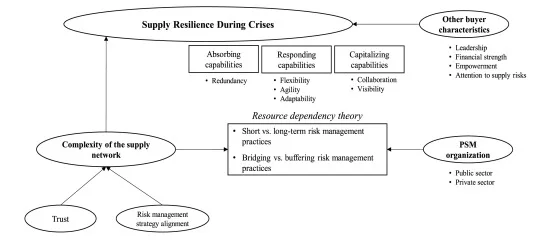
The conceptualized digital transformation and leadership are considered as enablers. Digital capabilities Digital capabilities, including artificial intelligence, big data analytics and blockchain improve supply chain visibility, real-time decision-making and automation of processes, which increase agility and resilience (Dubey et al., 2023; Wu et al., 2024). Leadership is the source of strategic orientation, the culture of flexibility, and the process of allocating resources needed to cope with the complex disruption (Legg et al., 2025).
Supply chain agility is indicated as a mediating process. Increased capabilities in digital, as well as competent leadership, can make supply chains respond more swiftly, be more responsive, and display enhanced operational adaptability, which, together, can make supply chains better able to deal with disruptions and translate capabilities into resilience results (Hsieh et al., 2023; Singh & Modgil, 2025).
The final result of this configuration of capability is performance. Agility and resilience are also expected to enhance key performance indicators such as lowering lead times, customer satisfaction, higher cost effectiveness and continued profitability in turbulent conditions (Hsieh et al., 2023; Singh & Modgil, 2025).
In general, the framework provides a systematic description of the interplay of integrated capabilities in the construction of resilient and agile supply chains within globally disruptive environments with a focus on the need to coordinate investments in technology, leadership, and dynamic capabilities (Cheng et al., 2025; Wu et al., 2024). 3. Hypothesis Development
Supply chains that are global are getting more vulnerable to systemic events like pandemics, political conflicts, and trade restrictions that interrupt flows of materials, create more uncertainty, and disrupt coordination along the networks. According to past studies, these interruptions have a negative impact on the efficiency of operations, level of service as well as cost performance. Thus, the hypothesis below is put forward:
H1: Global disruptions have had an adverse impact on supply chain performance.
Supply chain agility helps companies to feel the changes of the environment, react swiftly, and reorganize business in a state of uncertainty. Agile, based on the theory of dynamic capabilities, increases the capacity of a supply chain to absorb shocks and overcome disruptions, as well as enhance resilience. Accordingly:
H2: Supply chain agility has a positive effect on the supply chain resilience.
Digital transformation increases the visibility, quicker information processing, and decision-making in supply chains. Digital technologies can help to respond more effectively to agile responses by enhancing sensing and reconfiguration capabilities to convert them into resilient results. Thus:
H3: The agility-resilience relationship is enhanced by digital transformation.
During a crisis, leadership is very relevant as it helps in making decisions and in the coordination of swift responses. Transformational and crisis based leadership styles enable flexibility, mobilization of resources and adaptive action and thus lessening the negative impact of disruptions on agility. Hence:
H4: Crisis-based and transformational leadership alleviates the adverse effect of global disruptions on supply chain agility.
4. Methodology
4.1 Research Design
The research design in this study is quantitative, cross-sectional research based on deductive research approach. The structure is suitable to test the theoretically formulated hypotheses that explore the correlations between global disruptions, supply chain agility, supply chain resilience, digital transformation, leadership, and performance. The study uses a survey-based approach to information on the perception and practices at the firm level concerning the responses of the supply chain to conditions of disruption.
4.2 Data Collection
Primary data is gathered using a designed questionnaire to the senior supply chain managers and executives who have strategic and operational control of the supply chain operations. Online professional research panels and managerial networks are used to select the respondents in order to guarantee industry diversity and authoritative decision-making. The use of digital platforms in data collection facilitates the application of firms located in different geographic locations and subject to different disruption levels.
4.3 Measures
The operationalization of all constructs is done through already tested and validated scales of measurement that are derived out of existing literature on supply chain and operations management. The measurement of supply chain resilience, supply chain agility, organizational performance, leadership style, and digital transformation is based on multi-item reflective scales to guarantee content validity and a similarity to the existing research. The evaluation of items is conducted with the help of Likert-type scales to describe both the agreement of the respondents and the perceived strength of practices and results.
4.4 Data Analysis
The dual-method method of analysis is used to measure linear and configurational relationships. The reason why PLS-SEM is applied in testing hypothesized direct, mediating, and moderating relationships is because of its appropriateness with complex models and being predictive. Simultaneously, the fuzzy-set Qualitative Comparative Analysis (fsQCA) is utilized to determine the presence of multiple configurational pathways that result in high supply chain resilience with reference to causal complexity and the presence of equifinality.
4.5 Validity and Reliability
In order to achieve methodological rigor, several procedures are observed to arrive at a validity and reliability test. The common method bias is assessed with the help of available statistical tests. Composite reliability (CR) and average variance extracted (AVE) are used to test construct reliability and convergent validity, and heterotrait-monotrait (HTMT) ratio is used to test discriminant validity. Further checks, such as outlier checks and multicollinearity checks, are done to increase robustness.
5. Results and Discussion
5.1 Result
5.1.1 PLS-SEM Results
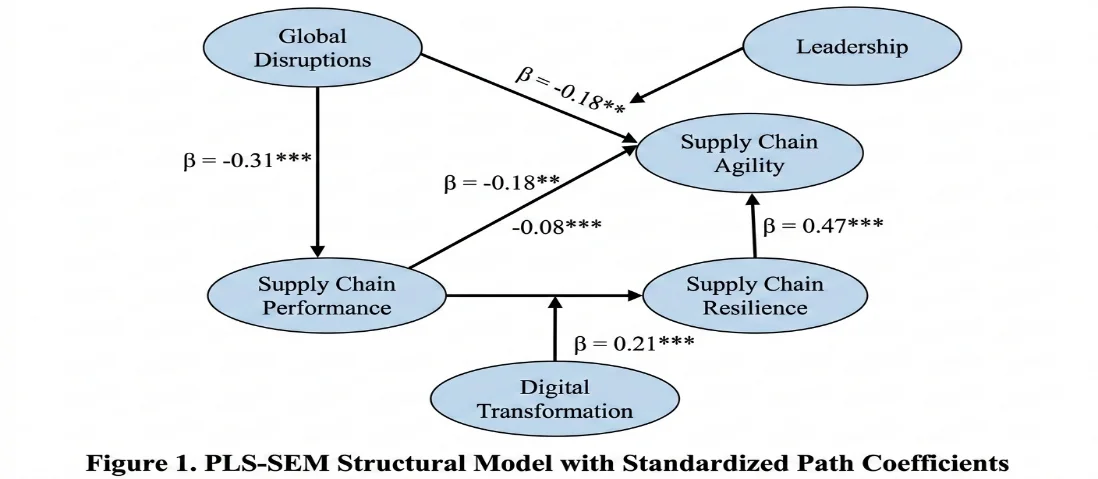
The PLS-SEM analysis was performed to verify the hypothesized relationships between global disruptions and supply chain agility, supply chain resilience, digital transformation, leadership, and performance. Measurement model showed good reliability and validity where all constructs have high values above expectations of composite reliability (CR > 0.70) and average variance extracted (AVE > 0.50). The HTMT criterion was used to determine discriminant validity.
Table 1. Structural Model Results (PLS-SEM)
| Hypothesis | Path | β | t-value | p-value | Result |
|---|---|---|---|---|---|
| H1 | Disruption → Performance | –0.31 | 5.12 | <0.001 | Supported |
| H2 | Agility → Resilience | 0.47 | 8.45 | <0.001 | Supported |
| H3 | Agility × Digitalization → Resilience | 0.21 | 3.96 | <0.001 | Supported |
| H4 | Disruption × Leadership → Agility | –0.18 | 3.14 | <0.01 | Supported |
The structural model outcomes show that the impacts of global disruptions have a statistically significant negative effect on the supply chain performance that corroborate H1. Supply chain agility has a high and positive impact on supply chain resilience, which supports H2 empirically. Through the mediation analysis, it can be seen that agility is a mediating variable of relationship between global disruptions and resilience, and thus, although disruptions directly damage performance, agile responses help firms to better absorb and recuperate from shocks.
Digital transformation provides a strong moderating influence on the association between agility and resilience, which is in line with H3. Digital capabilities enable firms to develop agile practices into resilient results because more digitally mature firms are better placed to do so. H4 is supported by the fact that leadership has a strong mitigating effect on the correlation between disruptions and agility.
5.1.2 fsQCA Findings
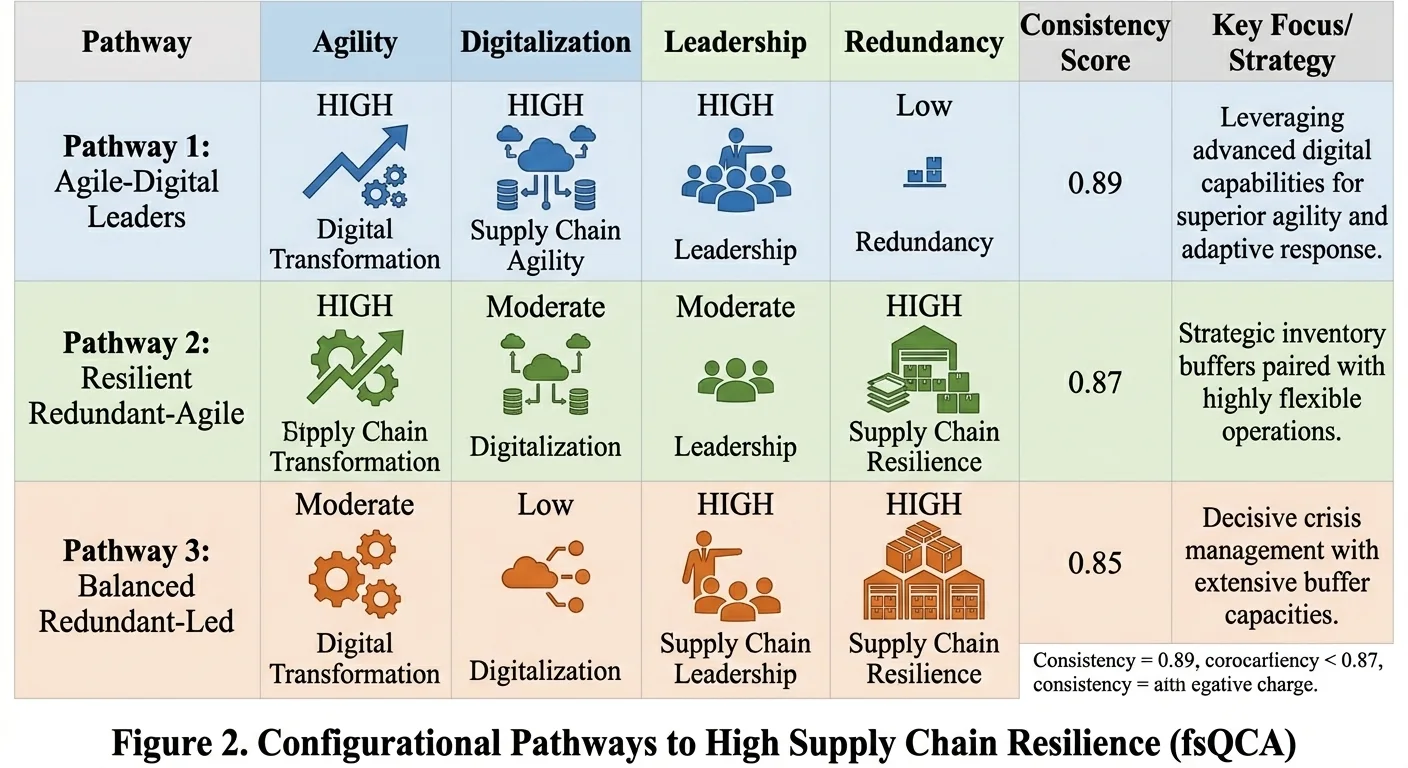
In order to supplement the net-effect logic of PLS-SEM, the use of fsQCA was used to determine the means of achieving high supply chain resilience through configurational pathways. The analysis demonstrates that there are a number of adequate configurations, which proves that no one capability or strategy can be a guarantee of resilience. Rather, resilience manifests in various ways of togetherness of agility, digital transformation, leadership, and redundancy.
Table 2. Configurational Pathways to High Supply Chain Resilience (fsQCA)
| Configuration | Agility | Digitalization | Leadership | Redundancy | Consistency |
|---|---|---|---|---|---|
| Pathway 1 | High | High | High | Low | 0.89 |
| Pathway 2 | High | Moderate | Moderate | High | 0.87 |
| Pathway 3 | Moderate | Low | High | High | 0.85 |
Some high-resilience formulations are associated with robust digital capability and high agility and adaptive leadership whereas others realize resilience by employing strategic redundancy and moderate digital maturity. The results show equifinality and asymmetry of causation that indicate that there are organizational context and disruption intensity variability in pathways to resilience.
5.1.3 Strategic Redundancy
The findings indicate the revised relevance of strategic redundancy as a resilience strategy. Multi sourcing strategies, safety stock, and buffer capacities turn out to be important survival mechanisms especially in high disruption environments. Although redundancy has been criticized of raising the cost of running the business, the results show that the companies using selective and strategic redundancy do better than companies that seek high efficiency.
This validates the existence of a cost-resilience trade-off, in which, minimal inefficiencies act as insurance against systemic shocks. Notably, the results of the fsQCA show that redundancy works best when it is implemented together with agility and leadership and not when it is applied alone.
5.1.4 Viability Perspective
The overall findings help to shift the overarching perception of resilience as a reactive response to supply chains as viable systems. The resilience, agility, and sustainability of viable supply chains are combined to guarantee survival in the long term, not the short-term optimization. The view fits the increasing acceptance of the fact that ESG considerations are not peripheral but the centre of operation resilience.
Agile, digitally enabled and ethically controlled supply chains are in a better place to endure long disruptions without losing their stakeholder confidence. The results indicate that companies that are shifting resilient to viable supply chain models attain an excellent performance in the long-term by balancing efficiency, adaptability, and responsibility.
5.2 Discussion
The results support the dynamic capabilities theory by showing that agility acts as a focal point by which companies use the exposure to disruption into adaptive resilience (Teece, 2014). The partial mediation effect of agility supports the previous studies that believe resilience is neither a capability nor an automatic process (Pettit et al., 2010).
The mediating purpose of digital transformation establishes that digital technologies complement sensing, decision-making, and reconfiguration processes and intensify the results of resilience (Dubey et al., 2021; Ivanov, 2022). In the same manner, buffering effect of leadership is consistent with literature on crisis leadership that shows the relevance of transformational and adaptive leadership approaches in the face of uncertainty (Boin et al., 2016; Underhill, 2008).
The findings of the fsQCA study can be seen to extend the study on resilience by confirming configurational logic and equifinality in line with the views of the complexity theory (Ragin, 2008). Lastly, the viability view is an extension of the supply chain theory where ESG concerns are considered as part of resilience discourse, which facilitates the requirement of viable and socially integrated supply chains (Ivanov, 2022). 6. Conclusion and Implications
This study explores the emergence of adaptive resilience of supply chains during systemic global disruption by incorporating agility, digital transformation, leadership, and strategic redundancy into a dynamic capabilities and viability-focused framework. The results demonstrate that the operationalization of resilience is a core process in which supply chain agility is put into play, which allows companies to detect disruptions promptly, react quickly, and re-align operations efficiently. Digital transformation as a critical driver of adaptive capacity, making supply chains increasingly visible, more able to coordinate, and faster in decision-making, can increase the ability of agile supply chains to absorb shocks and maintain performance in the presence of high levels of disruption.
In terms of theory contribution, the research proposes the theory of dynamic capabilities and empirically integrates it into a large scale disruption backdrop to show how sensing, seizing, and reconfiguring capabilities all work together to establish supply chain resilience. The combination of the Anticipation-Adaptation-Absorption framework and agility as a micro-foundation makes the research contribute to a more practical and process-oriented concept of resilience. Furthermore, the implementation of viability-based resilience logic alters the analytical approach by focusing on short-term recovery as the main objective of the analysis to the long-term survival, which implies the prioritization of agility, resilience, and sustainability as critical pre-conditions of sustainable supply chain performance.
These findings have significant implications to managers. Resilience should be seen as an ability-forming process but not a responsive result and sequencing investment during various disruption stages. At times of great uncertainty, one should invest in agility-enhancing systems like flexible sourcing, speedy decision-making frameworks, and online visibility solutions. These must be filled with the support of strategic redundancy and structural adaptation in the long term to make them robust and viable. Digital transformation should be viewed as an enabling capability that can be enforced within the context of more comprehensive strategic goals, and leadership development, directed at the crisis-oriented and transformational competencies, should be oriented towards facilitating coordination, learning, and the ability to act.
At the policy level, the findings demonstrate the significance of favorable institutional and infrastructural conditions in the development of resilient and viable supply chains. Digital infrastructure investments, trade facilitation mechanisms, and digital ecosystems interoperability have the potential to boost the adaptive capacity of firms at the systemic level to a considerable extent. Transparency principles of supply chains, intercountry data transfer, and partnerships between the government and companies can also be used to decrease the susceptibility to global interruptions and enhance the national and regional resilience.
Nevertheless, this research has limitations that can be taken up through research in future. Cross-sectional research design does not allow the examination of the dynamic development of capabilities and resilience with time. Future research needs to utilize longitudinal research methods that will study the capability development over, or between, periods of disruption. Also, further studies on circular and closed-loop supply chains would enhance the knowledge base on the roles of resilience and closed-loop supply chain in enhancing supply chain sustainability in a world that is becoming more uncertain.
Reference
Alfaqiyah, E., Alzubi, A., Aljuhmani, H. Y., & Öz, T. (2025). How Industry 4.0 Technologies Enhance Supply Chain Resilience: The Interplay of Agility, Adaptability, and Customer Integration in Manufacturing Firms. Sustainability, 17(17), 7922. https://doi.org/10.3390/su17177922
Ali, I., Gligor, D., Balta, M., & Papadopoulos, T. (2025). Leadership style’s role in fostering supply chain agility amid geopolitical shocks. Industrial Marketing Management, 124, 212–223. https://doi.org/10.1016/j.indmarman.2024.11.015
Aslam, H., Khan, A. Q., Rashid, K., & Rehman, S. (2020). Achieving supply chain resilience: The role of supply chain ambidexterity and supply chain agility. Journal of Manufacturing Technology Management, 31(6), 1185–1204. https://doi.org/10.1108/JMTM-07-2019-0263
Boin, A., ‘T Hart, P., Stern, E., & Sundelius, B. (2016). The Politics of Crisis Management: Public Leadership under Pressure (2nd ed.). Cambridge University Press. https://doi.org/10.1017/9781316339756
Cheng, S., Li, M., & Zhang, J. (2025). Digital platform capabilities and supply chain resilience in the VUCA context: The mediating role of network embeddedness. Technology Analysis & Strategic Management, 1–15. https://doi.org/10.1080/09537325.2025.2556762
Dey, P. K., Chowdhury, S., Abadie, A., Vann Yaroson, E., & Sarkar, S. (2024). Artificial intelligence-driven supply chain resilience in Vietnamese manufacturing small- and medium-sized enterprises. International Journal of Production Research, 62(15), 5417–5456. https://doi.org/10.1080/00207543.2023.2179859
Dubey, R., Bryde, D. J., Blome, C., Dwivedi, Y. K., Childe, S. J., & Foropon, C. (2024). Alliances and digital transformation are crucial for benefiting from dynamic supply chain capabilities during times of crisis: A multi-method study. International Journal of Production Economics, 269, 109166. https://doi.org/10.1016/j.ijpe.2024.109166
Dubey, R., Bryde, D. J., Dwivedi, Y. K., Graham, G., Foropon, C., & Papadopoulos, T. (2023). Dynamic digital capabilities and supply chain resilience: The role of government effectiveness. International Journal of Production Economics, 258, 108790. https://doi.org/10.1016/j.ijpe.2023.108790
Dubey, R., Gunasekaran, A., Childe, S. J., Fosso Wamba, S., Roubaud, D., & Foropon, C. (2021). Empirical investigation of data analytics capability and organizational flexibility as complements to supply chain resilience. International Journal of Production Research, 59(1), 110–128. https://doi.org/10.1080/00207543.2019.1582820
El Baz, J., & Ruel, S. (2024). Achieving social performance through digitalization and supply chain resilience in the COVID-19 disruption era: An empirical examination based on a stakeholder dynamic capabilities view. Technological Forecasting and Social Change, 201, 123209. https://doi.org/10.1016/j.techfore.2024.123209
Fan, L., He, J., Su, B., & Wang, C. (2025). Digital technology penetration and supply chain resilience improvement: Enterprise innovation strategies in the digital age. International Review of Financial Analysis, 108, 104722. https://doi.org/10.1016/j.irfa.2025.104722
Grzybowska, K., & Tubis, A. A. (2022). Supply Chain Resilience in Reality VUCA—An International Delphi Study. Sustainability, 14(17), 10711. https://doi.org/10.3390/su141710711
Hamdy, A. (2024). Supply chain capabilities matter: Digital transformation and green supply chain management in post-pandemic emerging economies: A case from Egypt. Operations Management Research. https://doi.org/10.1007/s12063-024-00481-5
Hasanein, A. M., Khairy, H. A., Aljoghaiman, A., & Al-Romeedy, B. S. (2026). Tackling Supply Chain Disruptions Through Digital Agility: Evidence from the Hotel Industry. Logistics, 10(2), 34. https://doi.org/10.3390/logistics10020034
Hsieh, C.-C., Chen, S.-L., & Huang, C.-C. (2023). Investigating the Role of Supply Chain Environmental Risk in Shaping the Nexus of Supply Chain Agility, Resilience, and Performance. Sustainability, 15(20), 15003. https://doi.org/10.3390/su152015003
Ivanov, D. (2022). Viable supply chain model: Integrating agility, resilience and sustainability perspectives—lessons from and thinking beyond the COVID-19 pandemic. Annals of Operations Research, 319(1), 1411–1431. https://doi.org/10.1007/s10479-020-03640-6
Kähkönen, A.-K., Evangelista, P., Hallikas, J., Immonen, M., & Lintukangas, K. (2023). COVID-19 as a trigger for dynamic capability development and supply chain resilience improvement. International Journal of Production Research, 61(8), 2696–2715. https://doi.org/10.1080/00207543.2021.2009588
Kähkönen, A.-K., & Patrucco, A. S. (2022). A purchasing and supply management view of supply resilience for better crisis response. Journal of Purchasing and Supply Management, 28(5), 100803. https://doi.org/10.1016/j.pursup.2022.100803
Kaneberg, E., Piotrowicz, W. D., Jensen, L.-M., Hertz, S., & Kedziora, D. (2025). Supply chain resilience and critical dynamic capabilities: A balanced scorecard approach. Production & Manufacturing Research, 13(1), 2523957. https://doi.org/10.1080/21693277.2025.2523957
Kazancoglu, I., Ozbiltekin-Pala, M., Kumar Mangla, S., Kazancoglu, Y., & Jabeen, F. (2022). Role of flexibility, agility and responsiveness for sustainable supply chain resilience during COVID-19. Journal of Cleaner Production, 362, 132431. https://doi.org/10.1016/j.jclepro.2022.132431
Legg, M., Silver, R. A., & Park, S. (2025). Weathering the Storm: Dynamic Capabilities and Supply Chain Agility in Supply Chain Resilience. Logistics, 9(4), 136. https://doi.org/10.3390/logistics9040136
Li, W., Yun, K., & Li, F. (2024). The Dynamic Driving Path of Organizational Resilience to Digital Transformation—An Empirical Study Based on TJ-QCA. Journal of the Knowledge Economy, 16(3), 13753–13775. https://doi.org/10.1007/s13132-024-02361-6
Long, H., Zhang, H., Wu, T., & Han, J. (2025). The Effect of Resource Restructuring on Supply Chain Resilience in the Context of Digital Transformation. Systems, 13(5), 324. https://doi.org/10.3390/systems13050324
Ma, L., Wang, J., & Feng, M. (2025). Promoting food industry supply chain agility and performance through the development of big data analytics: Based on PLS-SEM and fsQCA approaches. Journal of Enterprise Information Management, 38(5), 1465–1491. https://doi.org/10.1108/JEIM-06-2024-0309
Napier, E., Liu, S. Y. H., & Liu, J. (2024). Adaptive strength: Unveiling a multilevel dynamic process model for organizational resilience. Journal of Business Research, 171, 114334. https://doi.org/10.1016/j.jbusres.2023.114334
Nikookar, E., Gligor, D., & Russo, I. (2024). Supply chain resilience: When the recipe is more important than the ingredients for managing supply chain disruptions. International Journal of Production Economics, 272, 109236. https://doi.org/10.1016/j.ijpe.2024.109236
Pedersen, S., Clausen, C., & Jørgensen, M. S. (2023). Navigating value networks to co‐create sustainable business models: An actionable staging approach. Business Strategy and the Environment, 32(1), 240–258. https://doi.org/10.1002/bse.3127
Peng, J., & Zhang, C. (2026). Relationship between Digital Technologies and Supply Chain Resilience: The Mediating Roles of Dynamic Capabilities and Supply Chain Cooperation. Natural Hazards Review, 27(1), 04025073. https://doi.org/10.1061/NHREFO.NHENG-2162
Pettit, T. J., Fiksel, J., & Croxton, K. L. (2010). ENSURING SUPPLY CHAIN RESILIENCE: DEVELOPMENT OF A CONCEPTUAL FRAMEWORK. Journal of Business Logistics, 31(1), 1–21. https://doi.org/10.1002/j.2158-1592.2010.tb00125.x
Pratondo, K., Kusmantini, T., & Sabihaini, S. (2021). Gaining Supply Chain Resilience and Performance Sustainability through Supply Chain Agility in Furniture SMEs in Yogyakarta. International Journal of Social Science and Business, 5(3), 392. https://doi.org/10.23887/ijssb.v5i3.37945
Pu, G., Qiao, W., & Feng, Z. (2023). Antecedents and outcomes of supply chain resilience: Integrating dynamic capabilities and relational perspective. Journal of Contingencies and Crisis Management, 31(4), 706–726. https://doi.org/10.1111/1468-5973.12473
Ragin, C. C. (2008). Redesigning Social Inquiry: Fuzzy Sets and Beyond. University of Chicago Press. https://doi.org/10.7208/chicago/9780226702797.001.0001
Ruamchart, B. (2023). Supply chain resilience after the Covid-19 pandemic in Thai industry. Uncertain Supply Chain Management, 11(4), 1617–1626. https://doi.org/10.5267/j.uscm.2023.7.007
Singh, R. K., & Modgil, S. (2025). Adapting to disruption: The impact of agility, absorptive capacity and ambidexterity on supply chain resilience. International Journal of Productivity and Performance Management, 74(2), 637–658. https://doi.org/10.1108/IJPPM-01-2024-0057
Teece, D. J. (2014). A dynamic capabilities-based entrepreneurial theory of the multinational enterprise. Journal of International Business Studies, 45(1), 8–37. https://doi.org/10.1057/jibs.2013.54
Tekic, A., Zerjav, V., & Tekic, Z. (2022). Evolution of project studies through the lens of engaged scholarship: A longitudinal bibliometric analysis. International Journal of Project Management, 40(5), 531–546. https://doi.org/10.1016/j.ijproman.2022.05.002
Underhill, J. B. (2008). The Politics of Crisis Management: Public Leadership under Pressure – By Arjen Boin, Paul ‘t Hart, Eric Stern, and Bengst Sundelius Lessons on Leadership by Terror: Finding Shaka Zulu in the Attic – By Manfred F. R. Kets de Vries. Political Psychology, 29(1), 139–143. https://doi.org/10.1111/j.1467-9221.2007.00619.x
Wu, L., Huang, J., Wang, M., & Kumar, A. (2024). Unleashing supply chain agility: Leveraging data network effects for digital transformation. International Journal of Production Economics, 277, 109402. https://doi.org/10.1016/j.ijpe.2024.109402
Xu, Y., Jia, F., Wang, L., & Chen, L. (2024). Can digital transformation improve firm resilience to supply chain disruption? The role of diversification strategies. Journal of Purchasing and Supply Management, 30(5), 100952. https://doi.org/10.1016/j.pursup.2024.100952
Yin, W., & Ran, W. (2022). Supply Chain Diversification, Digital Transformation, and Supply Chain Resilience: Configuration Analysis Based on fsQCA. Sustainability, 14(13), 7690. https://doi.org/10.3390/su14137690
CITE THIS ARTICLE
Sarker, A. (2025). Building Resilient and Agile Supply Chains under Global Disruptions. Stout in Business and Management. https://www.researchbyantara.com/article/80cb7111-d476-4e75-831a-272550857f31
A. Sarker, “Building Resilient and Agile Supply Chains under Global Disruptions,” Stout in Business and Management, 2025. [Online]. Available: https://www.researchbyantara.com/article/80cb7111-d476-4e75-831a-272550857f31
Sarker, A. (2025) ‘Building Resilient and Agile Supply Chains under Global Disruptions’. Stout in Business and Management. Available at: https://www.researchbyantara.com/article/80cb7111-d476-4e75-831a-272550857f31
Sarker, Antara. “Building Resilient and Agile Supply Chains under Global Disruptions.” Stout in Business and Management, 2025, https://www.researchbyantara.com/article/80cb7111-d476-4e75-831a-272550857f31.
Antara Sarker. “Building Resilient and Agile Supply Chains under Global Disruptions.” Stout in Business and Management (2025). https://www.researchbyantara.com/article/80cb7111-d476-4e75-831a-272550857f31.
Sarker A. Building Resilient and Agile Supply Chains under Global Disruptions. Stout in Business and Management. 2025. https://www.researchbyantara.com/article/80cb7111-d476-4e75-831a-272550857f31
@article{article_80cb7111d4764e75831a272550857f31,
  title = {Building Resilient and Agile Supply Chains under Global Disruptions},
  author = {Antara Sarker},
  year = {2025},
  journal = {Stout in Business and Management},
  url = {https://www.researchbyantara.com/article/80cb7111-d476-4e75-831a-272550857f31},
}
TY - JOUR AU - Antara Sarker TI - Building Resilient and Agile Supply Chains under Global Disruptions PY - 2025 JO - Stout in Business and Management UR - https://www.researchbyantara.com/article/80cb7111-d476-4e75-831a-272550857f31 ER -