Supply chain operations worldwide are being revolutionized through automation, Digital Supply Chain Management (DSCM) that allows companies to conduct speedy, economical and dependable processes. This paper will give a comparative analysis of how DSCM and automation can influence the effectiveness of supply chains in the United States and Bangladesh. Primary surveys of supply chain professionals and secondary industry reports, as well as case studies, were reviewed using a mixed-method analysis to assess such operational metrics as lead time, cost of production, accuracy of order fulfilment, and responsiveness. The results have shown that the complete implementation of DSCM in the United States is effective in creating efficiency, cost-reduction, and improved resilience of the supply chain. There are observed evidences of benefits of partial adoption in Bangladesh relative to the manual processes, but infrastructural constraints, mismatch in skills of the workforce, and the dependence on manual processes limits the scale of the benefits. The research refers to such bottlenecks like high cost of implementation, lack of digital infrastructure, and workforce preparedness and outlines the opportunities of digital solutions (IoT, AI, ERP, and robotics) in streamlining supply chains. The insights can guide policymakers, business leaders, and researchers on actions to bring about the digital revolution in the developing economies and improve the effectiveness of the global supply chain.
Research ArticleSupply Chain ManagementPublished
Evaluating the Impact of Automation on Supply Chain Efficiency: A Comparative Study of the United States and Bangladesh
Correspondence: antara.sarkerdu@gmail.com
Abstract
Keywords Digital Supply Chain Management (DSCM)AutomationSupply Chain EfficiencyLead Time ReductionProduction Cost Optimization
1. Introduction
One of the most transformative technologies in industries and supply chains have not been left behind because automation has taken shape. With the rising complexity of global supply chains, the changing demands of consumers, companies are being challenged to be more efficient, cost-effective, and enhance the delivery of services(Mohan Banur et al., 2024).
Automation has been highly utilized in supply chain management in the United States which has a high technological infrastructure and large-scale industries. With completely automated warehouses and autonomous trucks, (Singh, 2023). Although the industrial sector in Bangladesh is on the rise, the lack of access to capital, lack of skilled labor and infrastructure gaps still remain as challenges that hindered the penetration of automation.
The given comparative research paper seeks to assess the role of automation in enhancing supply chain efficiencies of the two countries with major indicators like productivity, cost-saving, order fulfillment velocity, labor effects, and the general resilience of supply chains among other factors. This research aims to offer deeper insight into how the automation can have a wider implication on the economy by comparing the experiences of the U.S. and Bangladesh(Hoque et al., 2021). It will also examine the role of government policies, labour skills and infrastructure in determining the rate and effectiveness of automation adoption in these nations.
Considering the global tendency to digitalization and the quick evolution of new technologies, the results of the presented study will be highly valuable to the policymakers, business people, and individuals, who want to comprehend how successful the automation is in various economies(Bhuiyan et al., 2023). The paper will also recommend ways of surmounting the challenges of developing countries such as Bangladesh and give recommendations on how to further invest in automation technologies to spur growth and efficiency in the future.
1.1 Background of the Study
The supply chains are the pillars of the global economy since they enable transfer of goods and services between manufacturers and consumers. An effective supply chain makes sure that goods are produced in a timely manner at a competitive price, and of uniform quality. The processes involved in traditional supply chains e.g. inventory management, order fulfillment, procurement and transportation were manual and demanded a lot of human intervention leading to increased possibilities of errors and inefficiencies(Islam et al., 2023).
Nevertheless, the growing need to have quicker delivery times, cheaper rates, and increased consumer satisfaction has placed considerable strain on companies to be innovative and enhance their supply chain business. (Haleem et al., 2021). The use of AI-based forecasting, inventory management robots, last-mile delivery drones, warehouse sorting and packing automation, etc., have all helped to make supply chains faster, more precise, and highly efficient.
Automation in the United States: A Mature Ecosystem
The United States has been on the forefront in embracing automation technologies in supply chains especially in the retail, manufacturing and logistics industries. (Litvinenko, 2020).
The logistic sector has been impacted by the use of robotics and autonomous machine distribution systems which have been developed by companies such as Amazon. These robots with AI and machine learning allow them to sort and package their orders much faster and are the reason why Amazon could fill millions of orders each day with a remarkable speed and precision(Tiwari et al., 2025). Likewise, self-driven trucks and drones are being tested and in certain instances, they are used in delivering the last mile, reducing the expenses and delivery time even more.
Industrial robots have transformed production lines in the manufacturing process. Ford, General Motors and Tesla companies have adapted high-technology robotics in order to carry out assembly, quality control, and material handling. The outcome is that the operational cost is drastically lowered, the number of injuries at workplace is reduced, and better product quality is achieved. In addition, automation has been integrated in supply chain software and systems such as Transportation Management Systems (TMS) and Warehouse Management Systems (WMS) to provide real time data collection and predictive analytics along with effective inventory management(OECD, 2020).
Automation in Bangladesh: Emerging but Constrained
Although Bangladesh has achieved a lot in industrial sector, especially in the field of textiles and manufacturing, it still has a lot of impediments to conquer on the way of complete automation of its supply chains. The textile sector in Bangladesh is a very important part of the economy in the country as it is one of the largest garment manufacturers in the world. Nevertheless, automation technologies have taken longer to be adopted in this sector as compared to the developed countries due to various factors(Hossian et al., 2019).
The first challenge is an inadequate supply of funds. Initial cost is another major drawback to most of the manufactures in Bangladesh especially the small and medium size enterprises (SMEs) due to the high initial cost of the automation equipment and technology. Moreover, the lack of skilled workers to work and support these sophisticated systems and the inability to fully utilize automation is observed in the country due to the shortage of skilled labor(Hasan et al., n.d.).
Even though these are the challenges, a few companies in Bangladesh are beginning to consider automation in order to remain competitive in the global market. An example is the Chittagong port which has adopted automated container handling systems and this has made the port to turn around faster and the cost of manual labor has also been cut. Moreover, giant textile factories are now starting to automate their operations including stitching, cutting, and inspecting. Nevertheless, automation in these sectors is still insignificant and is mostly reliant on foreign technology and expertise(Sarkar et al., 2023).
Additionally, the infrastructure of the country, especially in reference to the digital connection and the stable power supply, is a problem in terms of automation implementation. Compromised speed and frequent power outage do not allow businesses to adopt automated systems where real-time data and full connectivity are mandatory.
The Comparative Significance of the Study
The cases of automation between the United States and Bangladesh provide one with useful insights into the difference between the challenges and opportunities that different economies have on the adoption of these technologies. Although the U.S. enjoys the advantage of strong technological framework and high automation penetration, Bangladesh is still at the nascent phase of its path with its infrastructure limitations and developing human resources(Gikandi et al., 2024).
These differences are important to the stakeholders in the two countries. In the case of the U.S., the optimization of the currently existing automation and responding to new challenges like cybersecurity and displacement of labor are among the priorities. In Bangladesh, it should focus on removing entry barriers to automation adoption, such as the digital infrastructure, workforce upskilling, and establishment of friendly policies to facilitate automation investments.
This paper, thus, gives a chance to address how the United States and Bangladesh are using automation to propel supply chain efficiency, which are the primary factors behind their respective adoption levels, and what can be learned in the process of these two divergent directions. Through comparison of developed and developing economies, the study will assist policymakers, business entities and academics to appreciate how the concept of automation can be used in various settings in order to streamline supply chains in the world today(Angst et al., 2017).
1.2 Problem Statement
Automation applied in supply chain management has been an incredible revolution in enhancing operation efficiency, cost reduction and a lot of productivity in most developed economies. Nonetheless, even though automation has become common in developed economies such as the (Fregidou-Malama et al., 2022). These are high start-up costs, unskilled laborers and poor infrastructure that does not allow the proliferation of automation technologies.
Automation in the United States has resulted in substantial changes in the supply chain operations including the enhanced processing time, enhanced inventory management, and enhanced precision in the order fulfillment. The success notwithstanding, there are still the fears that it is displacing workers, the issue of cybersecurity, and whether such forms of automation would be sustainable over the world in the future due to global disruptions such as economic downturns or trade interruptions(Rahman et al., 2017).
In contrast, in Bangladesh where manufacturing and logistics industries are increasing, automation has not been taken up much. Although there has been some advancement in certain domains like port operations, large scale manufacturing, due to the use of manual processes, most of the supply chains continue to be ineffective in supplying services, slow operations, and higher operational costs. The comparatively low capital investment capacity, poor technological infrastructure, and the unskilled workforce of Bangladesh result in adoption of automation being a slower and more complicated process(Huq & Stevenson, 2020).
The gap in this research is the lack of understanding of the comparative effect of automation on supply chain efficiency in the United States and Bangladesh, considering the operational, financial, and workforce-related effects of automation in the two nations. The study aims to determine how far down the automation road can be taken in order to enhance efficiency in the two disparate economic situations and how obstacles must be overcome to enable its wider use in Bangladesh(Kharal et al., n.d.).
1.3 Research Objectives
The main objective of conducting the research is to estimate the effects of automation on supply chain efficiency by conducting a comparative analysis of the case in the United States and Bangladesh. In particular, the following objectives are planned in the research:
1. To Evaluate the Existing Level of Automation in Supply Chain in the United States and Bangladesh.
Determine major points of success in automation application within the supply chains of the two nations.
Assess the extent of adopting automation technologies, including robotics, AI, IoT, and autonomous vehicles, in the U.S. and Bangladesh.
2. To Compare the Effects of Automation on Supply Chain Operational Efficiency.
Assess the impact of automation on the major operational indicators, including the speed of order fulfillment, inventory, and order error rate, and cycle time.
Compare the efficiency gains in the processes of automation in the United States and Bangladesh.
3. In order to Examine the Economic Implication of Automation on Supply Chain Costs.
Review the immediate financial advantages of automation, including a reduction in labor, transportation, and storage costs in the two nations.
Research on the initial expenses to adopt automation and long-term savings, such as ROI, in the United States and Bangladesh.
4. To Explore the Social and Workforce Consequences of supply chain automation.
Examine the impacts of automation on the workforce in the two nations, in terms of job displacement, reskilling issues, and creation of new employment.
Establish how the government, education, and corporate policies can alleviate the adverse workforce effects of automation.
5. To Analyze the Problems and Obstacles of Intensive Automation adoption in Bangladesh.
Determine the major problems encountered by companies in Bangladesh to adopt automation; these could be capital constraints, technology, and the capability of the workforce.
Compare these barriers to the ones encountered in the United States and suggest ways of surmounting them in Bangladesh.
6. To Recommend Policy Advice on how to improve the Implication of Automation in the efficiency of the supply chain in Bangladesh.
Formulate practical policy proposals to the Bangladeshi government and business to enable the successful implementation of automation in supply chains.
Recommend ways to address the obstacles to the adoption of automation including the need to improve infrastructure, educate, and motivate investment in automation technologies.
Through these objectives, this research paper will add value on the current state of automation in supply chains in both developed and emerging economies and provide recommendations to businesses, policymakers, and other researchers of how to maximize the efficiency of their supply chains by automation.
2. Literature Review
The supply chain management (SCM) principle has been significantly transformed over the years, especially due to the emergence of new technologies of digitalization and automation. The digitization and automation of SCM practices have been shifting slowly, but a significant change has occurred with the efforts of the industry 4.0. These values introduce such technologies as the Internet of Things (IoT), Big Data, and Artificial Intelligence (AI), redesigning global supply chains, particularly in such industries as Ready-Made Garments (RMG) in Bangladesh.
2.1 The Role of Automation in Supply Chain Management
The adaption of automation in SCM has been generally acknowledged as one of the most important elements of enhancing the efficiency of the operations. Automation eliminates human error, accelerates processes and enables a real-time processing of data. Ajwani-Ramchandani et al. (2021) state that digital-based supply chain solutions can help considerably to improve decision-making and inventory management. Logistics automation, especially in warehousing and distribution, is seen to have helped businesses to simplify their operations and cut lead time (Shahadat et al., 2023).
The use of digital tools in the RMG sector in Bangladesh has been found to have positive influence in minimizing lead time and cost of production. IoT and other digital technologies can enhance communication through the whole supply chain, whereas Big Data analytics can make more accurate predictions and demand control (Rahaman, 2022). Digitalization can make significant changes to the manufacturers in Bangladesh, although the country has to address several issues, such as high production rates and the slow pace of new technology adoption. Agreements on the use of smart factories and automated warehousing are necessary to minimize operational inefficiencies as both Ali (2022) and Ageron et al. (2020) discuss(Nitsche, 2021).
Table 1. Benefits and Challenges of Automation in Supply Chain Management
| Category | Benefits | Challenges |
|---|---|---|
| Operational Efficiency | - Reduces operational cycle times- Increases throughput and productivity- Enhances order accuracy | - High initial capital investment- Integration challenges with existing systems- Resistance to change within workforce |
| Cost Reduction | - Reduces labor costs- Lowers inventory holding costs- Optimizes resource allocation | - Maintenance costs for automation systems- Training and reskilling workforce- Cost of technology adoption in small firms |
| Flexibility & Responsiveness | - Improves responsiveness to market fluctuations- Enhances real-time decision-making- Reduces lead time | - Reliance on data integrity- Lack of infrastructure for real-time data sharing in emerging markets- Initial adjustment period for implementation |
| Data Management | - Real-time data analytics- better demand forecasting- Increased transparency across the supply chain | - Cybersecurity concerns- Data overload and misinterpretation- Risk of system vulnerabilities and cyber-attacks on automated systems |
| Customer Satisfaction | - Faster order fulfillment- Greater customization capabilities- Improved customer service through faster responses | - Customer resistance to changes in process- High expectation of consistency leading to pressure on automation systems for constant performance |
2.2 Supply Chain Challenges in Bangladesh’s RMG Sector
As much as the Ready-Made Garment (RMG) industry in Bangladesh has gone a long way in terms of its growth and world popularity, the industry has still had a number of issues that have hampered its operational efficiency and competitiveness in the global market. These issues are largely brought about by inefficiencies in the main phases of the supply chain such as transportation, automation, and coordination. These problems need to be mitigated in order to maintain the status of Bangladesh as a top RMG exporter in the global market.
The massive supply chain issues that have affected the RMG sector in Bangladesh are inefficient transportation and logistics, poor automation, non-integration in the supply chain, and high cost of production. The lack of good transport infrastructure and logistics is often leading to delays, which add to the lead time and uncertainty of delivery times. This poses a competitive drawback as compared to other countries like China and India that enjoy a better system of logistics(Ali et al., 2021).
The other issue of concern is the poor implementation of automation. Most of the RMG manufacturers in Bangladesh have continued to use manual and labor-intensive operations because of hesitations or failure to invest in highly advanced technologies. This slows down the production, raises the cost of labor and lowers the efficiency(Akhter, 2023). Also, lack of proper integration and coordination of suppliers, manufacturers, distributors cause communication gaps, inefficiencies in procurement and delays in production and delivery processes. These are compounded by the fact that production cost is high due to poor manufacturing processes and inadequate advancement in technology and these concerns eventually influence the profitability and competitiveness in the global environment.
All of these issues are interrelated, and they lead to the increase in the lead times, which is one of the most considerable structural flaws in the Bangladesh RMG supply chain. Relations between these difficulties and their aggregate effect on the lead time are depicted in Figure 2.1.
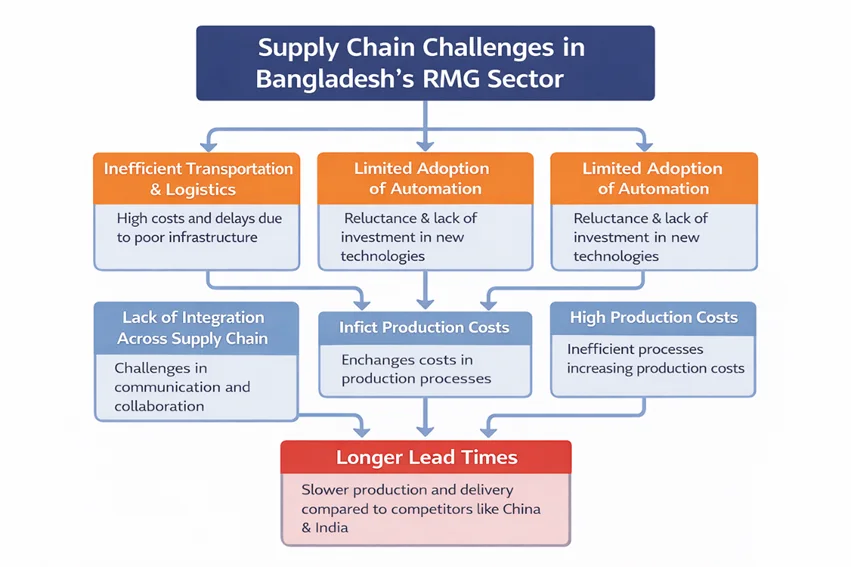
The ineffective logistics, low levels of automation, low levels of integration and high costs of production increase the lead times (longer lead times) and decrease the capacity of Bangladeshi RMG manufacturers to react to the market demand promptly. Consequently, the competing countries who have more automated and integrated supply chain systems can always deliver products quicker and more efficiently which is a great challenge to the long term competitiveness of Bangladesh in the global apparel market(Mohsen, 2023).
2.3 Benefits of Digital Supply Chain Management (DSCM)
DSCM has become a vital practice that can be used to improve the performance of the supply chain by involving the use of modern digital technologies like Internet of Things (IoT), Big Data analytics, artificial intelligence (AI), and cloud-based solutions. DSCM allows to share information in real time, make decisions with data, and coordinate with more partners in the supply chain, increasing efficiency and responsiveness. Lead time reduction can be listed among the greatest advantages of DSCM. The digital tools enable the firms to observe production status, stock, and transportation status in real time which enhances the accuracy of planning and minimizes delays. As the RMG industry in Bangladesh is still characterized by long lead times, which is one of the primary problems, DSCM will be able to optimize the monitoring of orders and control the communication among manufacturers, suppliers and buyers(Alphonse et al., 2025).
Enhanced transparency through the supply chain assists businesses to react faster to shifts in the customer or production demand. The other significant benefit of DSCM is cost efficiency. Digital supply chains increase autonomy on data collection and analysis, minimize errors and wastefulness of resources depending on the manual process. Predictive analytics technologies and AI-based demand forecasting help companies to keep the appropriate inventory levels, which minimise the inventory holding and excess stock costs. In the case of labor-intensive production, such as RMG, DSCM will be able to regulate the increasing production expenses through the increased accuracy of the planning and waste reduction. DSCM is also improving supply chain transparency and traceability(Mubarik & Khan, n.d.-a).
Digital platforms allow facilitation of information across all supply chain stages and enhance stakeholder collaboration and trust. This is of special significance to global apparel supply chains, where buyers are increasingly requiring that they be in line with the requirements of sustainable, labor, and quality standards. Enhanced traceability can help in improving quality control, solving issues faster and improving the relationship between buyers and suppliers. Additionally, DSCM enhances flexibility and resiliency of the supply chain. Supplies chains that have been digitized are more able to deal with disruptions like demand changes, shortages of raw materials or logistical crises(Weerabahu et al., 2022). Data and analytics in real-time enable companies to detect risks in time and undertake corrective measures more efficiently.
This feature was particularly realized at times of world pandemics like the COVID-19 when digitally enabled supply chains were found to be more adaptable than their traditional, manual counterparts. The implementation of DSCM is based on several Industry 4.0 technologies, which, in their combination, help to improve the functioning of the supply chain. The most important pieces, as demonstrated in Figure 2.3, consist of Artificial Intelligence, Internet of Things, Robotics and Automation, Cloud computing, Cybersecurity, Blockchain, Big data and analytics, Systems integration and Smart manufacturing. These pillars are the basis of digital transformation of both developed and developing economies which provides real-time visibility and predictive decision-making and operational resilience.
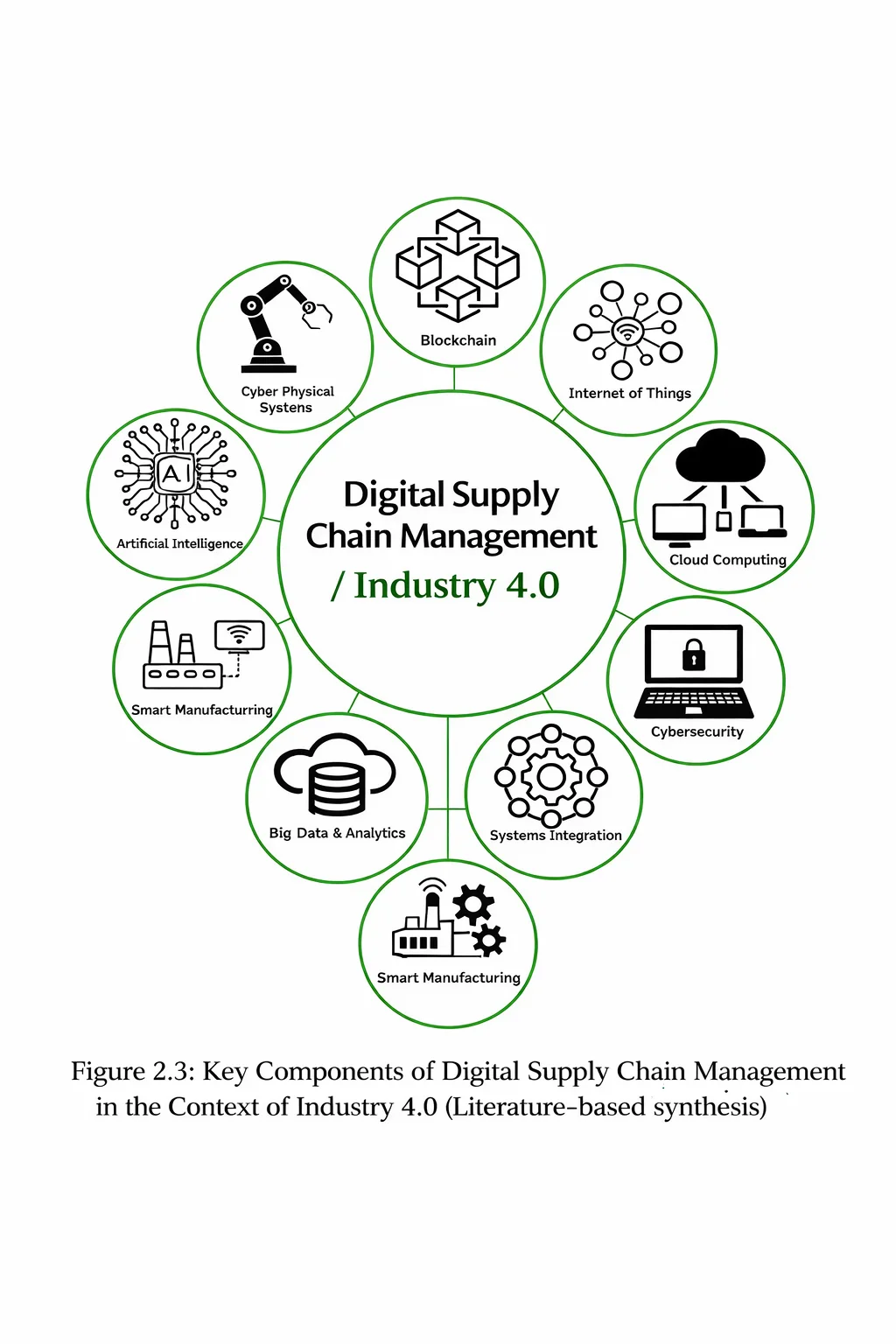
In general, Digital Supply Chain Management adoption has immense advantages regarding efficiency, cost-saving, transparency, and resiliency. In the case of Bangladesh RMG industry, DSCM has a strategic business case of eliminating structural inefficiencies and enhancing global competitiveness. Nonetheless, in order to achieve these benefits, there is a need to have the infrastructure in place, talented human resources as well as long-term investment in digital technologies(Zhang et al., 2024).
2.4 Risks and Challenges of Digital Supply Chain Management (DSCM)
Although Digital Supply Chain Management (DSCM) has a high number of advantages, there are various risks and challenges that relate to its usage, which may curtail its performance, especially in the developing economies. These are technological, financial, organizational, and human-resource issues, and they should be given much attention to achieve the successful digital transformation(Zeiringer, n.d.).
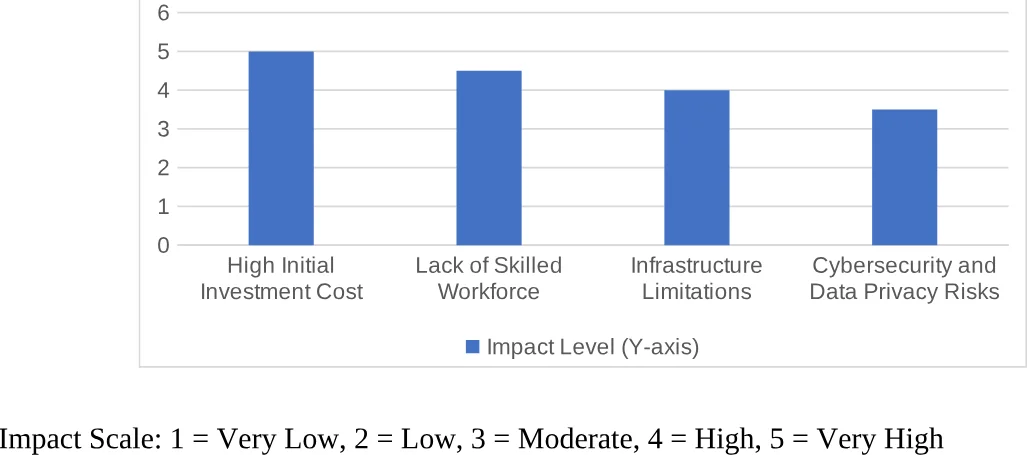
The high start up cost is one of the greatest problems of DSCM. The implementation of such digital technologies as IoT systems, advanced analytics, and cloud-based infrastructure are associated with significant capital investments. Such investment may not be economically viable to most of the firms in developing nations such as Bangladesh particularly the small- and medium-sized firms (SMEs). This financial constraint tends to slow down or put off implementation of DSCM when long-term efficiency is apparent.
The shortage of skilled human resource is also another significant challenge. Digital supply chains need technical-skilled employees in the field of data analytics, automation, and information technology. The skills gap in the RMG industry of Bangladesh is high, with the workforce trained to work in a labor-intensive production process, and thus not allowing the use of digital systems that can be implemented effectively. Organizations might find it difficult to exploit DSCM technologies without proper training and capacity-building programs(Bahramian Dehkordi, 2025).
Limitation of infrastructure is also a big obstacle to DSCM adoption. The real-time data exchange and system integration need reliable electricity supply, the high-speed internet connection, and strong digital infrastructure. Weak infrastructures in most developing areas expose business to additional operating risks and lower the reliability of the systems, which would mitigate the possible positive effects of digitalization.
Moreover, the risk of cybersecurity and confidentiality of information has become a burning issue in digital supply chains. Greater use of digital platforms predisposes the supply chain networks to cyber threats, data breaches, and system disruptions. Weak cybersecurity policies and implementation enforcement may predispose organizations to operational and reputational losses(Bahramian Dehkordi, 2025).
Lastly, the resistance to change within the organization may slack down the implementation of DSCM. Companies that are used to the traditional supply chain operations might be unwilling to embrace new digital systems since they lack certainty, fear job loss, or simply because they are not aware of digital technology. DSCM initiatives can cause poor performance unless the leaders are committed to them and effective change management strategies are in place.
Impact Scale: 1 = Very Low, 2 = Low, 3 = Moderate, 4 = High, 5 = Very High
Altogether, despite potential vitality of DSCM to improve efficiency and competitiveness of the supply chain, its successful implementation requires overcoming financial, infrastructural, human, and organizational obstacles. These risks are especially significant to address in the case of developing economies such as Bangladesh, where the digitization of the supply chain is the key to the long-term sustainability of the supply chain and its integration into the global market.
2.5 Comparative Literature: Digital Supply Chain Management in the United States and Bangladesh
Digital Supply Chain Management (DSCM) has a different adoption and impact between the developed and the developing economies as a result of diverse technologies maturity, infrastructure, institutional capacity, and skills of the work force. The available literature indicates a visible difference between the countries like the United States, where digital supply chains are not yet well-developed, and Bangladesh, where DSCM is still at its early stages of development.
The technological integration and automation are high in the implementation of DSCM in the United States. Research indicates that the U.S. companies are broadly applying sophisticated technologies to warehousing, transportation, and inventory management including artificial intelligence, robotics, Internet of Things (IoT), and big data analytics. The technologies allow real time visibility, predictive decision making and seamless coordination between supply chain partners. Empirical data indicates that adoption of DSCM in the United States has led to drastic changes in the operation efficiency, cost-cutting, and supply chain resilience, especially in retail, manufacturing, and logistics sectors(Shakib, 2025).
Conversely, the Bangladesh literature indicates that DSCM adoption is both undistributed and in small businesses. The majority of the Bangladesh companies, especially in the Ready-Made Garment (RMG) segment, still use manual processes and heavily intensive labor as their supply chain methods. Although a part of large manufacturers and port operations has also seen the introduction of partial digitalization, i.e., automated cutting machines, enterprise resource planning (ERP) systems, and digital tracking tools, the overall rate of integration is low. In Bangladesh, researchers always cite financial resources, inadequate digital facilities, and the lack of skilled human capital as some of the biggest obstacles to the implementation of DSCM(Osman, 2023).
Table 2.2: Relative Comparison of Digital Supply Chain Management Adoption in the United States and Bangladesh.
| Dimension | United States | Bangladesh |
|---|---|---|
| Level of DSCM Adoption | High and widespread across industries | Limited and uneven, mainly large firms |
| Use of Advanced Technologies | Extensive use of AI, IoT, robotics, big data analytics | Partial digitalization, limited automation |
| Infrastructure Readiness | Strong digital infrastructure and reliable connectivity | Inadequate infrastructure and connectivity gaps |
| Workforce Skills | High availability of skilled digital and technical workforce | Skills gap in digital and analytical capabilities |
| Supply Chain Visibility | Real-time visibility and data-driven decision-making | Limited visibility and manual information flow |
| Supply Chain Resilience | High resilience and rapid response to disruptions | Vulnerable to disruptions and delays |
| Investment Capacity | High investment capability and access to finance | Financial constraints, especially for SMEs |
| Overall Impact on Efficiency | Significant improvement in efficiency and competitiveness | Moderate improvement with unrealized potential |
Table 2.2 shows a comparative picture of the Digital Supply Chain management adoption in the United States and Bangladesh. The comparison shows that there were serious gaps in technological preparedness, infrastructure, labor competencies and general performance of the supply chain. The United States exemplifies the example of sophisticated and combined digital supply chains, but Bangladesh is at an early level, with financial, infrastructural, and human-capital constraints.
The other difference of the literature that is important is the one that refers to supply chain resilience and responsiveness. Digitally enabled supply chains in the United States show more flexibility in reacting to changes in demand, disruption and world shock responses. Real time data and sophisticated analytics enable the company to predict risks and take corrective measures on time. On the other hand, the supply chain of Bangladesh is more prone to the disruption caused by the low visibility, protracted lead times, and poor coordination between supply chain participants. The restrictions decrease the capacity of companies to react to unexpected fluctuations in the demand or supply situation(Hai et al., 2024).
The two contexts are also differentiated by the workforce aspect. Adoption of DSCM in the United States has been characterized by massive investment in workforce skills and technological training. Despite the fact that there are fears about the aspect of job displacement, the literature portrays that digital transformation has also led to the emergence of new jobs in data analytics, system management and supply chain planning. In Bangladesh, the work force is highly educated to work with their hands, and lacks opportunities to train properly, which limits the efficient use of digital technologies. Consequently, the level of resistance to digital transformation is increased.
In general, the comparative literature suggests that, although DSCM has provided significant efficiency and resilience outcomes in developed economies, such as the United States, its prospective has not been fully exploited in Bangladesh. The difference is both technological and institutional and structural. These results have pointed to context-related measures that should be applied to overcome the challenge of financial, infrastructural, and human-capital limitations to enable successful DSCM implementation in emerging economies(Shahadat et al., 2023).
2.6 Literature Gap and Research Justification
Although the literature on Digital Supply Chain Management (DSCM) is increasing, a literature review indicates that there are a number of significant gaps that have informed the need to carry out this study. The current research is mainly aimed at developed economies like the United States where the development of DSCM is at an advanced level, the infrastructure is well developed, and the staff is highly qualified in their work. The outcome measures of these studies are always significant operational efficiency enhancement, cost savings, and supply chain resilience due to the digital integration and automation. It is not clear, however, whether these results can be applied to developing economies where the technological levels of readiness, financial capabilities, and the level of skills of the workforce differ greatly(Mahmood et al., 2025).
Regarding Bangladesh, the main focus of current studies is limited to individual implementation of DSCM, including automated manufacturing in a few RMG factories or the port digitalization programs. Extensive literature which measures the overall implication of DSCM in a variety of industries or supply chain activities is rare. Moreover, the empirical studies, which measure the impact of the digital technologies on supply chain efficiency, reduction of lead time, and the costs of operation in emerging economies are limited. The majority of researches are descriptive or case-specific, and this limits the possibility to generalize the results and implement any actionable plans to be adopted by a large number of people.
The other gap that is found in the literature is the comparative studies between the developed and the developing economies. Although there are several studies on the outcome of DSCM in United States, there are very few studies that strive to provide a systematic comparison of the outcome of this program with a developing country like Bangladesh. This constrains the perception of contextual issues like infrastructure, labor expertise and financial constraints that affect the success of DSCM implementation. It is also crucial that comparative research that would reveal the impediments to as well as facilitators of digital transformation in various economic environments and develop country-specific advice is conducted(Portee, 2021).
Lastly, the literature available usually does not focus on how the adoption of technology correlates with the human factor, such as human skills in place of work, training, and institutional preparedness. The successful implementation of DSCM is not necessarily determined by technology alone but also by the skill of the firms to handle change, upskilling of the employees and embedding the digital systems into the current working processes. These socio-technical issues are especially important to address in economies that are developing and where the most common challenges are the lack of skills and opponents of change
Rationale of the current paper:
Considering these gaps, the proposed study will help to assess how DSCM can influence the efficiency of the supply chain in a comparative context involving the United States and Bangladesh. This study aims to add knowledge to the developed and developing contexts by:
Determine the major variations in the adoption of DSCM, technology maturity, and business results.
Measure the advances and constraints of DSCM on enhancing efficiency, decreasing lead time and cost optimization.
Identify barriers to implementation in the context i.e. financial constraint, infrastructure constraint, and workforce preparedness.
Offer practical suggestions to the developing economies to use DSCM efficiently, but using the best practices in the developed economies.
The study has contributed to the theory and practice by filling these literature gaps. It develops a better comprehension of how DSCM may be fitted to various economical and organizational settings and gives evidence-based suggestions to policymakers, administrators, and authors who aim at maximizing supply chain performance with the aid of digital technologies(Linh et al., 2021).
3.Research Methodology
3.1 Research of the Industry
The paper investigates the adoption and effect of Digital Supply Chain Management (DSCM), and automation in the manufacturing and logistics industries of the developed and developing economies. The United States is chosen as the model of the developed DSCM implementation, which is highly automatized, has strong digital infrastructure, and has a highly qualified workforce that can work with sophisticated technology in the supply chain. Conversely, Bangladesh is an emerging economy with the major adoption of DSCM being in the Ready-Made Garment (RMG) sector and some port operations but limited adoption due to financial, infrastructural, and human-capital constraints(Mubarik & Khan, n.d.-b).
The business research implies an in-depth analysis of the secondary sources such as the published industry reports, government databases, and academic research to define the major trends in the digitization and automation of the supply chain. Reportedly in the U.S., companies are actively using technologies including artificial intelligence, Internet of Things (IoT), robotics, and advanced analytics to make their operations more efficient, cost-effective, and more resilient to shocks in the supply chain. In contrast, the current literature about Bangladesh shows that automation and digitalization processes are partially carried out, usually limited to the large-scale businesses, and the small and medium-sized enterprises (SMEs) are still using manual operations(Zhang et al., 2024).
In addition, this section explores industry-specific practices where key operational measures would include the lead time, speed of production, accuracy of orders, and cost-effectiveness. These industry-specific features are the keys to designing the comparative study because they present the context of assessment of the adoption of DSCM and automation advantages and difficulties in two different economic settings. It is also used in the basis of knowledge, which informs the choice of suitable research participants, data collection, and techniques in the future.
3.2 Research Approach
This research paper will use a comparative and mixed-methods research design to assess the effectiveness of Digital Supply Chain Management (DSCM) and automation on supply chain efficiency in the United States and Bangladesh. The methodology will combine quantitative and qualitative techniques to have a holistic viewpoint of the operational performance, technology adoption, and contextual influence that influences supply chain performance.
Quantitative component quantifies key performance indicators (KPIs) including lead time, cost of operation, accuracy in fulfilling orders, and efficiency of the supply chain in general. Information on this element will be gathered through both secondary sources, such as industry reports, company performance statistics and government statistics, and primary data that will be gathered via structured surveys of the supply chain managers and operations executives. The quantitative analysis can objectively measure the effects of DSCM and can compare the impact of DSCM in a developed and a developing economy(IJCSCM, n.d.).
The qualitative element gives contextual information concerning the problems, obstacles and organizational approaches related to DSCM adoption. Semi-structured interviews and case studies reflect the experiences of supply chain professionals in the two countries and note the reasons, including readiness to workforce, infrastructure constraints, and unwillingness to embrace digital transformation. The qualitative data is an addition to the quantitative research as a means of offering complexity and elaboration of trends and patterns observed.
As a result of the combination of both approaches, this research method will allow carrying out triangulation, which will increase the validity and reliability of outcomes. It also enables to have more subtle knowledge of the DSCM adoption indicating both its quantifiable effect on efficiency and cost but also the organizational and human processes that contribute to successful adaptation. It is especially appropriate when it comes to comparative studies because it can take into consideration both structural differences in the industry setting and the obtained operational results in the different economic settings(Mhaskey, 2024).
3.3 Research Design
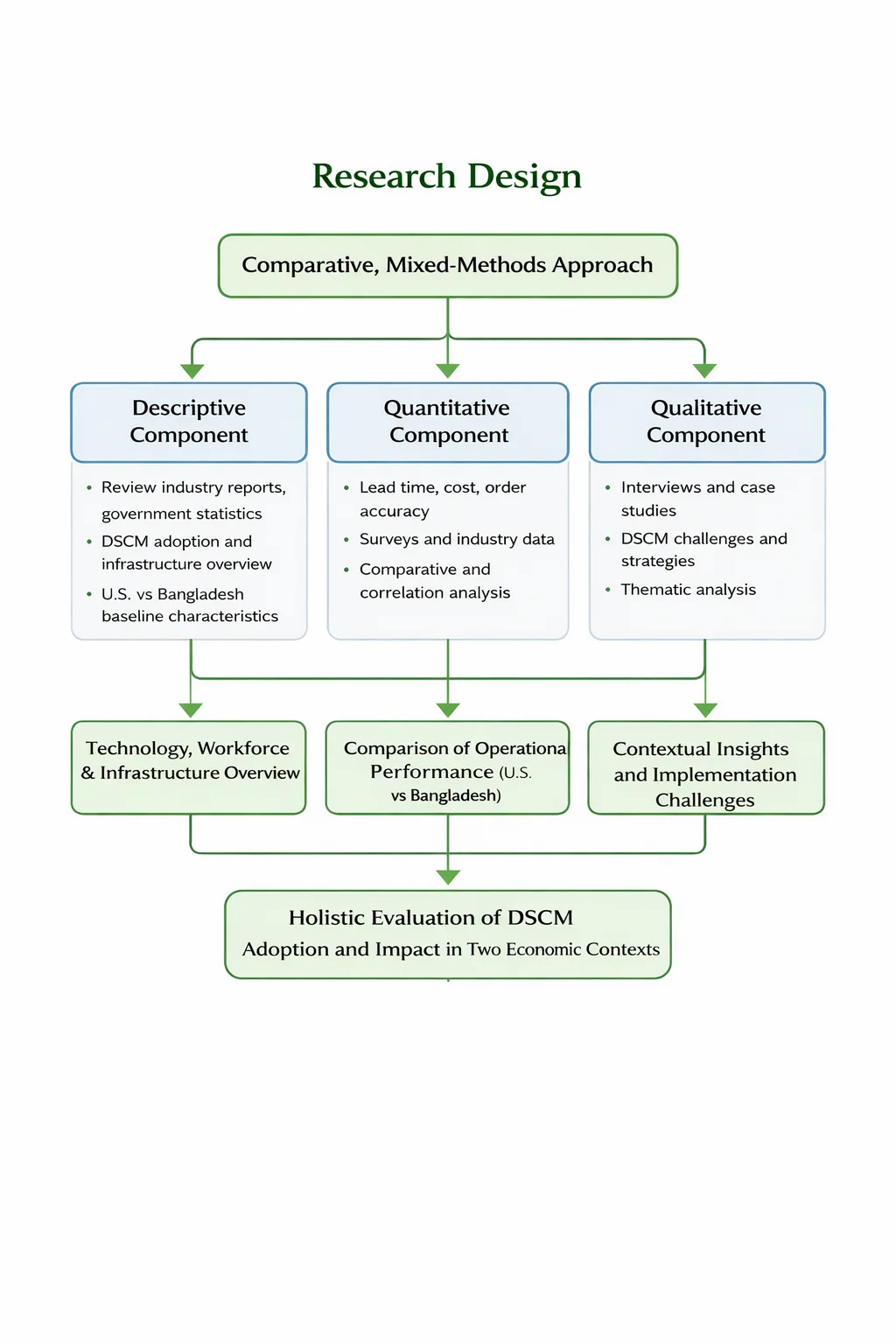
The study is designed in a way that analyzes the use and effect of Digital Supply Chain Management (DSCM) and automation within two economic settings, United States and Bangladesh. In this regard, the research design used in the study is a comparative, mixed-methods study, which combines descriptive, quantitative, and qualitative elements. This design will allow the thorough analysis of the functioning performance, technological usage, and organizational influence on the implementation of DSCM.
Research Components
1. Descriptive Component
Read industry reports, government reports and academic literature.
Presents a description of the adoption of DSCM, technological infrastructure, and workforce in the United States and Bangladesh.
Brings in some initial reference properties to comparative analysis.
2. Quantitative Component
Measures performance operational metrics, such as lead time, operating expenses, and accuracy of fulfilling the orders.
Gathers information by conducting surveys of the supply chain managers and secondary data in the industry.
Performs comparative and correlation analysis in order to find out the correlation between DSCM adoption and efficiency outcomes.
3. Qualitative Component
Utilizes semi-structured interviews, and case studies in order to investigate organizational strategies, challenges and contextual aspects.
Using thematic analysis, determines the patterns and best practices and obstacles to DSCM adoption.
Flowchart of Research Design
Figure 3.1 that depicts the three major aspects and the role they play in the overall assessment of DSCM adoption and impact in United States and Bangladesh.
The flow chart illustrates a systematic process, starting with descriptive, quantitative and qualitative analysis, which is succeeded by synthesis of technology, workforce and infrastructure overview, operational performance comparison and contextual insights. The last phase comprises an overall analysis of the DSCM adoption and its effect on two economies.
3.4 Population of the Research and Sample
The research is aimed at analyzing the application and effects of Digital Supply Chain Management (DSCM) in two sectors, the United States and Bangladesh. The targeted population of the research includes the supply chain professionals, operations managers, and IT managers directly engaged in the implementation and management of the DSCM technologies. DSCM adoption is highly implemented and operationalized in the US with large and medium enterprises in the manufacturing, retail, and logistics sectors. In Bangladesh, the target population mostly comprises of the professionals of the Ready-Made Garment (RMG) industry, the selected port authorities, and the medium-sized enterprises that have partially digitalized and automatized their supply chain processes(Attaran, 2020).
The sampling technique used is purposive in order to make sure that the participants have pertinent experience and information in terms of DSCM adoption. Around fifty respondents representing each of the countries are included in the sample, and their choice was determined by the fact that they were directly involved in DSCM implementation and had an understanding of digital tools, like IoT, artificial intelligence, enterprise resource planning systems, and automation technologies. The selection of the respondents is also based on their capacity to give in-depth information regarding the performance of operations, workforce preparedness, and technological predicaments in their respective organizations(Sued et al., 2022).
The purposive approach will make sure that the gathered information contains the most appropriate and relevant data of professionals, who deal with DSCM systems on a routine basis. This specific sampling will enable a fruitful comparative study between the United States and Bangladesh as it will include both the operational and contextual determinants that affect the adoption and effectiveness of DSCM. The study builds strong grounds on the benefits, limitations, and issues related to the adoption of digital supply chains in various economic settings by analyzing people with first-hand experience of the new technology.
3.5 Data Collection
To gather data on this study, primary and secondary sources are to be used to guarantee reliability, validity and completeness. The primary data will be collected in the form of structured survey and semi-structured interviews with the supply chain managers, operations executives and the IT specialists directly engaged in the implementation or management of the Digital Supply Chain Management (DSCM) systems. The proposed surveys will help to obtain the quantitative data regarding the adoption rates, performance of the operations, efficiency indicators, and impediments with the integration of digital technologies. Interviews give qualitative information about the organizational strategies, workforce preparation, infrastructure bottlenecks, and situational aspect of DSCM implementation. These qualitative feedbacks supplement the quantitative data by bringing out practical experiences, barriers, and good experiences by organizations.
Published industry reports, government databases, and academic literature are used to obtain secondary data that would give background and benchmark information on the United States and Bangladesh. Consulting companies like McKinsey and Deloitte provide industry data on the trend in technology adoption, efficiency boosts in operations and strategic practices. Quantitative data on workforce potential, infrastructure, and economic conditions that are important to supply chain operations can be collected in government databases, such as the U.S. Census, the Bureau of Labor Statistics, and the Bangladesh Bureau of Statistics. Reports of the company such as the annual reports and operation performance records are also examined to determine the practical effect of DSCM on efficiency, lead time and reduction of cost.
The study will use primary and secondary data to get a triangulated approach hence, strengthening the credibility of the findings. This multi-source scheme of data collection will provide a complete insight of DSCM adoption, operational performance, and contextual problems of developed and developing economies. The method is also convenient to compare the United States and Bangladesh and thus assist the research goals and allow the conclusions on the effectiveness and obstacles of DSCM implementation to be made based on the evidence.
3.6 Questionnaire Setting
To obtain a wealth of information on adoption, implementation and effects of Digital Supply Chain Management (DSCM) in both United States and Bangladesh, the questionnaire to be used in the study is aimed at extracting detailed information on the subject. It includes structured sub-parts that are used to cover various dimensions such as technology usage, operational performance, workforce preparedness, organizational issues and perceived utility. The questions are mostly closed-ended on a Likert scale of 1 to 5, which will enable the participants to measure the level of their perception of DSCM effectiveness in such aspects like lead time reduction, cost efficiency, accuracy of order fulfillment, and resilience of the entire supply chain. Furthermore, there are also open-ended questions that would allow the respondents the chance to elaborate on certain challenges, best practices, and situational issues that determine the implementation of DSCM in their organizations.
The questionnaire was pre-tested on a limited sample of the supply chain professionals to be clear, relevant and reliable. This pilot test provided feedback that was used to refine the wording of questions, order and format. The last tool will make sure that all the questions are consistent with the research goals and can be used to obtain both quantifiable and qualitative information. The study ensures consistency because of the standardization of the questionnaire, which allows the researcher to compare the results in the United States with the results in Bangladesh accurately. The instrument is also useful to combine the quantitative survey data with qualitative data collected in interviews and secondary data, which increases the validity and strength of research findings.
3.7 Data Analysis
The collected data pertaining to the current research is explored with the help of both quantitative and qualitative methodologies to be sure that it leads to a complete assessment of Digital Supply Chain Management (DSCM) implementation and its effect on the supply chain efficacy. Structured surveys give the quantitative data, which is subjected to descriptive statistical analysis containing measures of central tendency, standard deviation, and frequency distributions to sum up on the adoption levels, operational outcomes, and perceived benefits in United States and Bangladesh. Comparative studies are done in order to draw differences between two countries in terms of adoption of technology, efficiency measures, and performance indicators of operation. The ability of DSCM adoption with key performance measure, which include lead time, operational costs and accuracy of order fulfillment, are assessed using correlation analysis.
Semi-structured interviews and open-ended questions on the survey are analyzed through thematic analysis to obtain qualitative data. The texts and verbatim responses are coded in order to detect recurring themes, patterns and knowledge regarding organizational strategies, workforce preparedness, infrastructure constraints and implementation issues. Qualitative and quantitative results are triangulated in order to confirm the results so that observed trends in the survey data can be supported by circumstantial and experiential evidence provided by the industry practitioners.
Tables, bar charts, and infographics are used to visualize the information and demonstrate the difference between the United States and Bangladesh, and the overall picture of the relationship between the adoption of DSCM and performance of the operations is provided. The statistical and thematic analysis provide the numerical evidence and the contextual knowledge and, therefore, allow the assessment of the DSCM implementation in a holistic manner. This is a method that assures that the research findings present the practical effects of digital supply chains as well as considering theoretical and operational issues of both developed and developing economies.
4. Analysis and Findings
4.1 Reliability Analysis
Cronbachs alpha was used to examine the reliability of the survey instrument to measure consistency and validity before the main analysis was done. Constructs of DSCM adoption, operational efficiency, workforce readiness and organizational challenges had Cronbach alpha values of over 0.70 meaning a high-level of internal consistency. This proves that the data collection tool is effective in determining the target variables and that the research results can be properly interpreted in terms of the efficacy and the role of digital supply chains in the United States and Bangladesh.
4.2 Analysis on Respondents
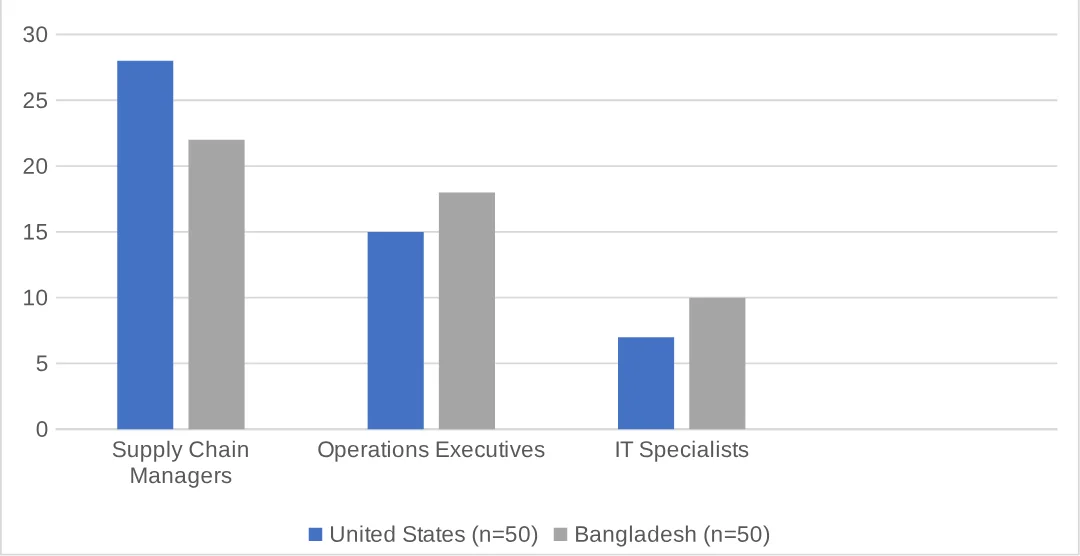
The analysis of demographic and professional profile of the respondents was conducted to put the findings in perspective. Supply chain managers, operations executives, and IT specialists engaged in the implementation of DSCM were part of the participants. In the US, the respondents are mostly representatives of large corporations with comprehensive DSCM systems, and in Bangladesh, the participants are representatives of RMG facilities and medium-sized companies with partial digitalization. Experiency, the size of an organization, and decision-making position are factors that can be used to explain differences in the perceptions of DSCM adoption and efficacy.
Table 4.1: Demographic and Professional Profile of Respondents
| Attribute | United States (n=50) | Bangladesh (n=50) |
|---|---|---|
| Supply Chain Managers | 28 | 22 |
| Operations Executives | 15 | 18 |
| IT Specialists | 7 | 10 |
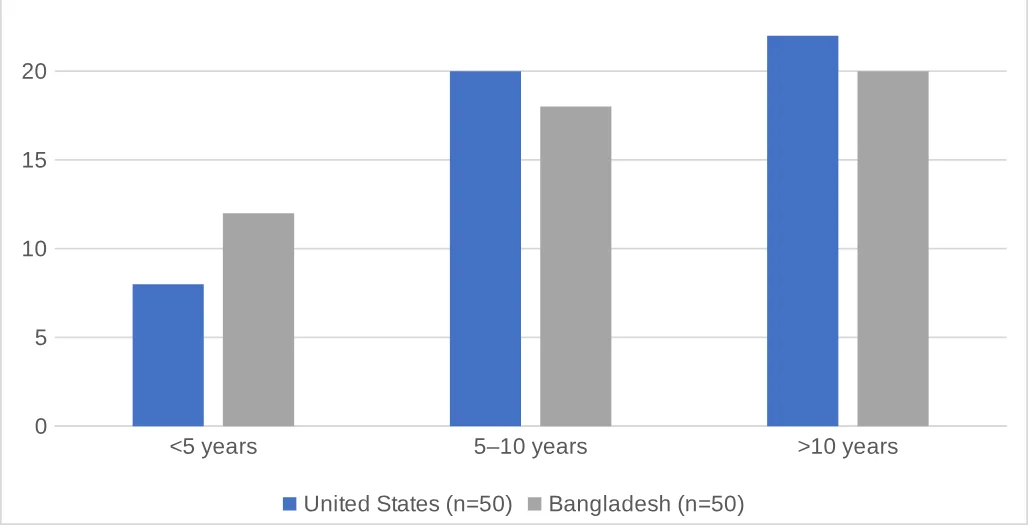
| Years of Experience <5 | 8 | 12 |
| Years of Experience 5-10 | 20 | 18 |
| Years of Experience >10 | 22 | 20 |
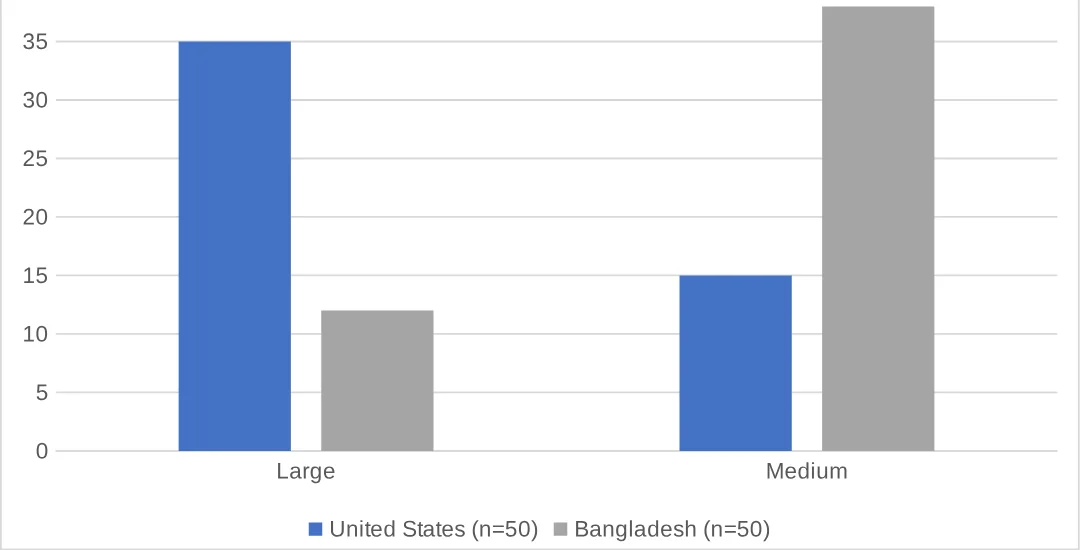
| Company Size: Large | 35 | 12 |
| Company Size: Medium | 15 | 38 |
Table 4.1 shows the professional structure of the respondents in the surveys of the two countries. They are mostly supply chain managers and operations executives who have a great experience in digital or traditional supply chain management. The U.S. respondents are mostly large companies that have advanced DSCM systems, whereas the Bangladeshi respondents are mostly medium-sized RMG factories with partial use of digital. These features are relevant to the understanding of comparative perception of the effectiveness of DSCM, its difficulties in adoption, and its operational performance.
In Figure 4.2a, the distribution of respondents in the survey professionally is depicted. Most of the participants are supply chain managers with the operations executives and IT specialists coming second. The U.S. respondents are mostly large businesses, whereas the Bangladeshi respondents represent mostly the mediocre RMG factories and port operations. This distribution offers a background to explain the perceptions of DSCM adoption and effectiveness in the two countries.
The years of professional experience of the respondents are demonstrated in Figure 4.2b. The U.S. respondents are more likely to have over 10 years of experience whereas Bangladesh respondents have more equal distributions across the experiences. This pattern influences the knowledge of digital tools and the attitude of supply chain effectiveness.
The organizational size of the companies of the respondents is shown in Figure 4.2c. In the United States, the largest share of respondents is the large enterprises with the developed DSCM, whereas in Bangladesh, the respondents are mostly the medium-sized ones with the partial digital adoption. The size of the company determines the ability to be digitally integrated and improved in operational efficiency.
4.3 Comparison Analysis Between Traditional and Digital Supply Chains
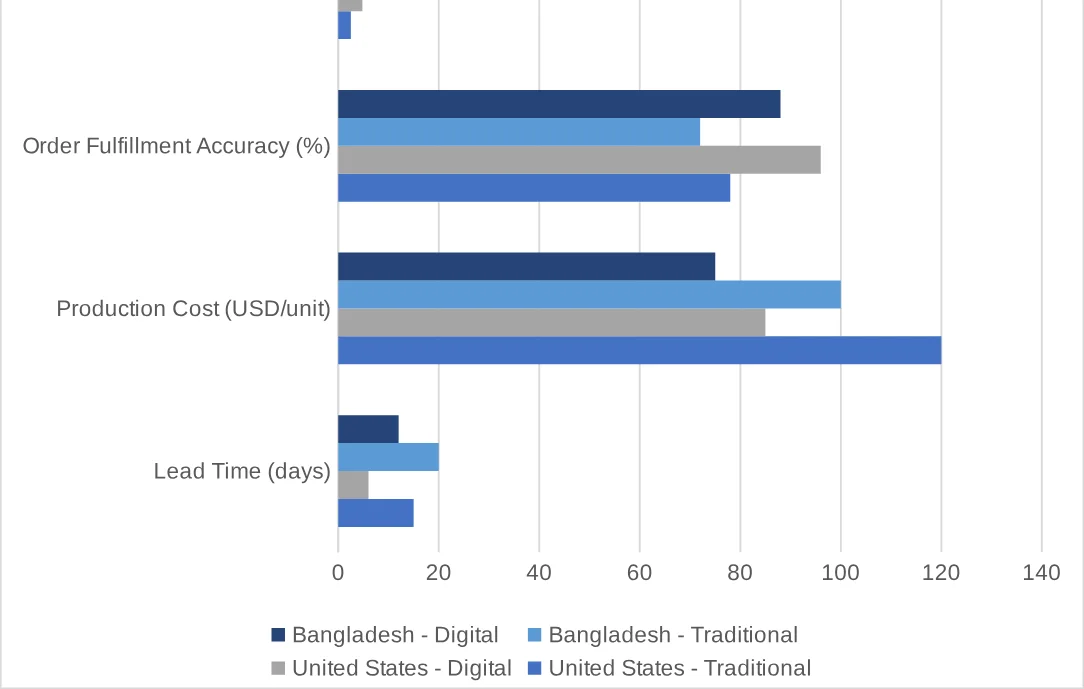
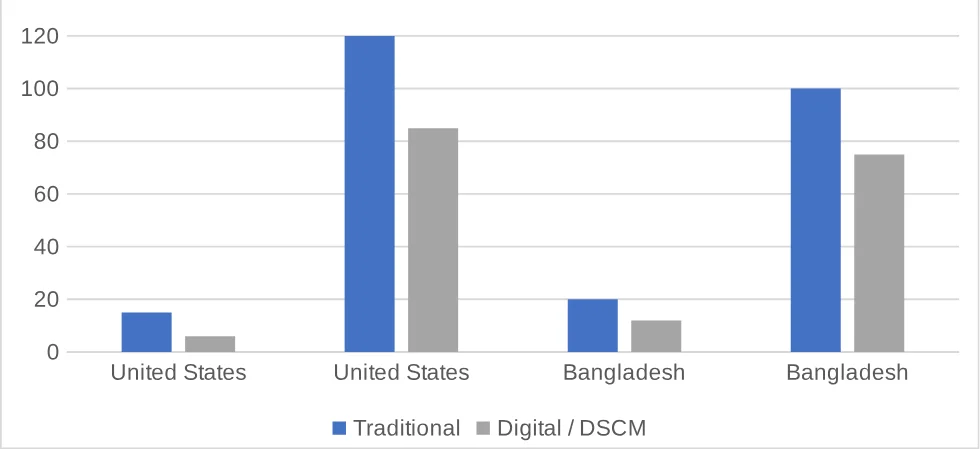
In order to compare traditional and digital supply chains, operational metrics were examined. These measures are lead time, cost of production, accuracy of order and responsiveness. Online supply chains are always superior to the classical ones. Complete implementation of the DSCM lowers the error and lead times in the United States. Bangladesh experiences partial digital adoption where there are improvements in the areas of digital adoption over manual practices but there are still some traditional processes that dominate.
Figure 4.1 shows variations of lead time, cost of operation and accuracy of order among the traditional and the digital supply chain in the two countries.
4.4 Cause of High Production Cost and Longer Lead Time Analysis.
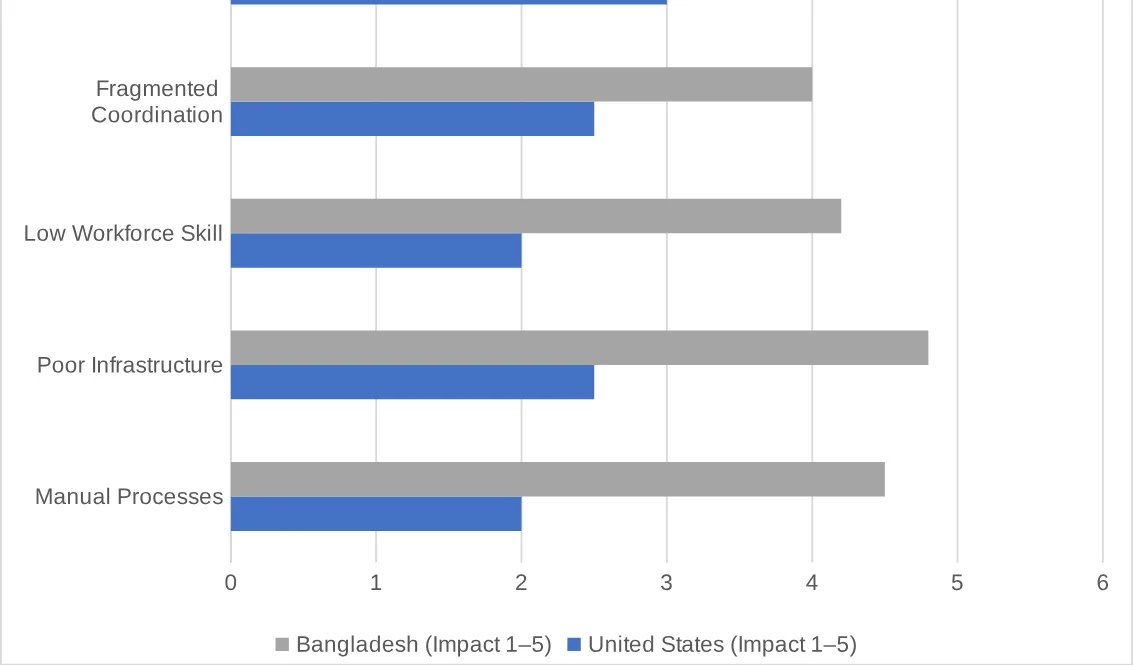
One of the most vital issues in the work of the supply chain is high costs of production, long lead times, and in particular, in the developing economies, such as Bangladesh. This section examines the key factors that have led to these inefficiencies and compares their magnitude in the United States where DSCM adoption is at an advanced stage and in Bangladesh where digital adoption is partial and traditional processes are still predominant. These reasons allow to understand how digitalization can solve the bottlenecks in the work and make it more efficient.
Table 4.4: Causes of High Production Cost and Longer Lead Time
| Cause | United States (Impact 1–5) | Bangladesh (Impact 1–5) |
|---|---|---|
| Manual Processes | 2.0 | 4.5 |
| Poor Infrastructure | 2.5 | 4.8 |
| Low Workforce Skill | 2.0 | 4.2 |
| Fragmented Coordination | 2.5 | 4.0 |
| High Material Cost / Procurement Delay | 3.0 | 4.5 |
Table 4.4 highlights the perceived effects of each cause on the cost of production and the lead time. In the US, automation and in-built digital mechanisms reduce the effects of these variables. Manual operations, inadequate infrastructure, and skills mismatch in Bangladesh have a serious effect on the cost of production and the lead times.
It is also evident in Figure 4.4 that the severity of the key factors influencing production cost and lead time in the two countries can be compared visually. Lack of manual process and infrastructure constraints serve little role in U.S. supply chains but predominant roles in Bangladesh. The lack of human resource skills and poor coordination also contribute to inefficiency in Bangladesh, which is why it is necessary to adopt digital and train the workforce to enhance the performance of operations.
4.5 Digital Supply Chain Effectiveness in Cost and Lead Time Reduction
Cost and lead time is greatly minimized by the DSCM adoption. Full digital integration yields considerable savings in the U.S. in terms of predictive analytics, automation, and optimized inventory. Even partial adoption of digital means, like ERP systems and on-order tracking, shows the results of shorter lead time and reduced operational costs in Bangladesh than in manual systems.
Figure 4.5 shows actual improvements in efficiency brought about by adoption of DSCM. The maximum reduction in lead time and operation cost would be in full digital adoption in the United States, and the partial adoption in Bangladesh, which is noteworthy on the improvement of the traditional manual processes. This finding emphasizes the usefulness of digital tools and operational performance improvement especially where the use of traditional supply chain practices is widespread.
4.5 Usage of Digital Tools
In this section, the use and frequency of use of particular digital tools in the supply chain in the United States and Bangladesh are analyzed using the SurveyMonkey results on supply chain managers, operations executives, and IT specialists. The awareness of the popularity of each tool offers information on operational efficiency, digital maturity, and the areas where it can be improved.
Table 4.6: Respondent Digital Tool Frequency
| Digital Tool | United States (Frequency /50) | Bangladesh (Frequency /50) |
|---|---|---|
| IoT for Inventory Tracking | 45 | 30 |
| Artificial Intelligence (AI) | 38 | 22 |
| Robotics / Automation | 42 | 18 |
| Enterprise Resource Planning (ERP) | 47 | 35 |
| Cloud-based Platforms | 40 | 28 |
| Blockchain | 25 | 10 |
| Big Data Analytics | 36 | 20 |
Table 4.6 shows ERP systems, inventory tracking, and robotics are the most popular tools used in the United States, which shows a high level of digital maturity. ERP systems and IoT devices are a bit more widespread in Bangladesh, and robotics, AI, and blockchain implementation are scarce. These discrepancies describe how different advanced and emerging economies differed in terms of digital integration and operational capacity.
4.6 Effect of Supply Chain Management Digitalization.
Digitalization has a major impact on the supply chain performance by enhancing visibility, coordination, and responsiveness throughout each operation. Fully integrating Digital Supply Chain Management (DSCM) technologies, in terms of the IoT, AI, robotics, ERP systems, and cloud platforms, leads to significant operational gains in developed economies like the United States. Monitoring real-time data, predictive analytics, and automation help to reduce the lead time, decrease the costs of production, improve the accuracy of order fulfillment, and increase the responsiveness to market changes(Liu & Chiu, 2021).
In less developed economies like Bangladesh, the partial use of the digital tools still proves to have quantifiable benefits compared to the traditional manual systems. ERP implementation, online monitoring of orders, and automated tracking of production activities minimize the error in operations, increase the level of coordination, and efficiency in resource allocation, resulting in shorter lead times and cost of production. Although both infrastructural constraints and lack of skills in the labor force hinder digitalization, even gradual digitalization has obvious efficiency benefits and enhances competitiveness in the global supply chains(S & S, 2023).
Table 4.7: Effect of Digitalization on the Metrics of Major Supply Chains.
| Metric | United States – Traditional | United States – Digital | Bangladesh – Traditional | Bangladesh – Digital |
|---|---|---|---|---|
| Lead Time (days) | 15 | 6 | 20 | 12 |
| Production Cost (USD/unit) | 120 | 85 | 100 | 75 |
| Order Fulfilment Accuracy (%) | 78 | 96 | 72 | 88 |
| Responsiveness (Score 1-5) | 2.5 | 4.8 | 2 | 4 |
Table 4.7 presents operational improvement of the digitalization. The efficiency gains realized by U.S supply chains owing to complete adoption of DSCM are greatest and Bangladesh has high benefits of partial adoption relative to the traditional systems.
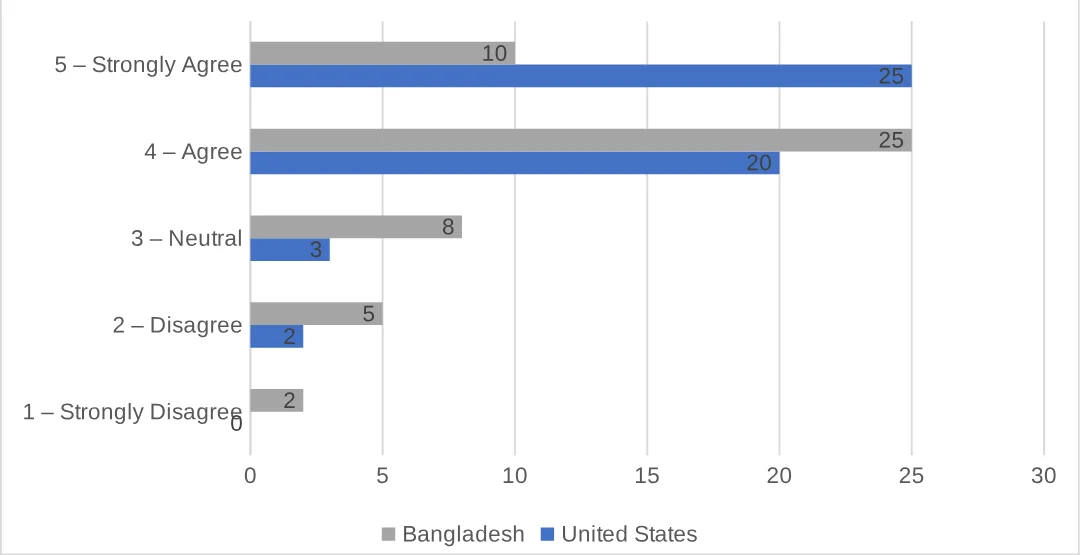
Figure 4.7a shows the degree of agreement obtained as to the effectiveness of DSCM in terms of reducing cost of production. The majority of the respondents (U.S.) are strongly agreeing or agreeing, whereas the distribution in Bangladesh is more diverse because it is partially adopted and infrastructurally difficult.
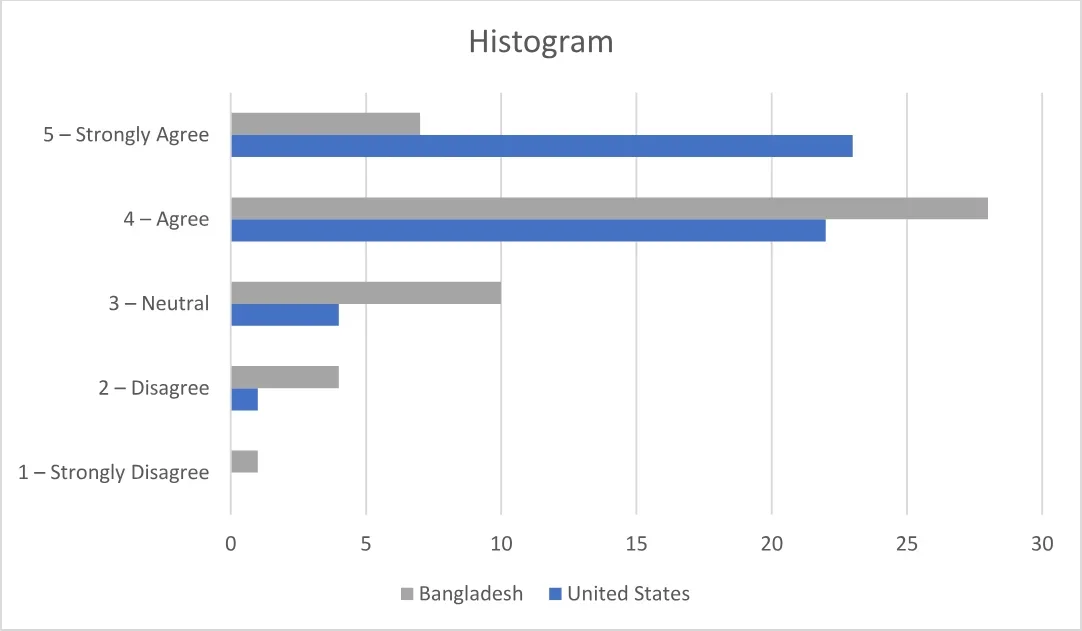
Figure 4.7b indicates the perception of the respondents on the effectiveness of DSCM in reducing lead time where the respondents in the U.S. have almost entirely agreed or agreed, with Bangladesh respondents moderately agreeing, and partially adopt benefit, despite the infrastructural and skill limitations.
5 Conclusion
The research compared the concept of Digital Supply Chain Management (DSCM) and automation on the efficiency of the supply chain with a comparison of the United States and Bangladesh. The study brings out the revolutionary nature of digitalization to minimize the lead time and production costs, improve accuracy in order fulfillment, and increase the responsiveness of operations, among others. The implementation of DSCM technologies, such as IoT, AI, robotics, ERP, and cloud platforms in the United States results in significant increases in its operations, indicating the ability of digital supply chains to optimize resource usage, reduce errors, and act fast when addressing the fluctuations of the market.
In Bangladesh whereby the partial implementation of DSCM is so common, the findings show that there is efficiency that is measurable in relation to traditional manual supply chain. The results of the survey and work metrics prove that even gradual digitalization, in the form of ERP systems, digitized order tracking, and automated control, leads to the decrease of the cost of production and the lead time. Nevertheless, the infrastructural constraints, shortage of skills among workforce and the use of manual processes are some of the obstacles in the way to the full adoption of the advantages of digital supply chains in developing economies.
The comparative analysis highlights the difference between developed and developing countries in the digital maturity. Whereas the U.S. supply chains are completely integrated and streamlined, the Bangladeshi supply chains are limited by the lack of automation and disjointed coordination. These results underline the importance of a specific investment in digital technologies, training of the working force, and development of infrastructures to become globally competitive and operational resilience.
To sum up, DSCM adoption is an essential factor in improving the effectiveness of supply chains, minimizing operations budgets, and responsiveness both in developed and developing environments. The research not only presents empirical evidence of quantifiable benefits of digitalization, but also outlines the issues that restrict its adoption in the developing economies. Research in the future needs to focus on how to scale digital integration in developing nations, the long-term effects of automation on labor relations, and how other new technologies like blockchain and AI could be used to improve supply chain performance further.
5.2 Future Scope of Study
The long-term consequences of complete adoption of DSCM in developing countries, such as the efficiency and competitiveness of automation and training of the workforce, are worth investigating in the future. Research might also explore the upcoming technologies, such as AI and blockchain, and their confluence impact on the supply chain visibility and risk control. DSCM insights can be applied in sector-specific research in the field of healthcare, logistics, or retail. Further, longitudinal research on the outcomes of performance over time would offer the data of long-time advantages and issues of digital supply chains.
6 Summary
This paper reveals that the digitalization changes the supply chain performance in various economic environments. The complete implementation of DSCM in the US brings about significant advances in lead time, cost effectiveness, error free order delivery, and responsiveness. The partial adoption in Bangladesh gives significant returns compared to conventional supply chains, and this illustrates that there is potential in the process of gradual digitalization. Any operational obstacle like manual process, inadequate infrastructure, and lack of skills among the workforce were identified and measured using survey and secondary data. These disparities and perceptions across countries are presented in visual forms e.g., in the form of tables, bar charts, and histograms. On the whole, the study supports the argument of the significance of DSCM as an essential tool to promote efficiency, competitiveness, responsiveness and present a basis of further investigation of technology integration, workforce development, and industry-specific implementation.
Reference
Akhter, M. (2023). Circular economy practices, challenges & opportunities in the Bangladesh ready-made garment (RMG) industry. https://lutpub.lut.fi/handle/10024/166178
Ali, M., Rahman, S. M., & Frederico, G. F. (2021). Capability components of supply chain resilience for readymade garments (RMG) sector in Bangladesh during COVID-19. Modern Supply Chain Research and Applications, 3(2), 127–144. https://doi.org/10.1108/MSCRA-06-2020-0015
Alphonse, K. A., Zhang, G., Aslam, B., Guo, S., Ji, M., & Maqsood, S. (2025). Digital supply chain management: Competitive advantage and sustainable production. Management Decision, 63(9), 3164–3186. https://doi.org/10.1108/MD-01-2024-0018
Angst, F., Aeschlimann, A., & Angst, J. (2017). The minimal clinically important difference raised the significance of outcome effects above the statistical level, with methodological implications for future studies. Journal of Clinical Epidemiology, 82, 128–136. https://doi.org/10.1016/j.jclinepi.2016.11.016
Attaran, M. (2020). Digital technology enablers and their implications for supply chain management. Supply Chain Forum: An International Journal, 21(3), 158–172. https://doi.org/10.1080/16258312.2020.1751568
Bahramian Dehkordi, B. (2025). Digital technology adoption, impact and development in sustainable supply chain management: An exploratory study. Lappeenranta-Lahti University of Technology LUT. https://lutpub.lut.fi/handle/10024/170181
Bhuiyan, M. R. I., Uddin, K. M. S., & Milon, M. N. U. (2023). Prospective Areas of Digital Economy in the Context of ICT Usages: An Empirical Study in Bangladesh. FinTech, 2(3), 641–656. https://doi.org/10.3390/fintech2030035
Fregidou-Malama, M., Chowdhury, E. H., & Hyder, A. S. (2022). International marketing strategy of emerging market firms: The case of Bangladesh. Journal of Asia Business Studies, 17(4), 804–823. https://doi.org/10.1108/JABS-12-2021-0504
Gikandi, A., Hallet, J., Koerkamp, B. G., Clark, C. J., Lillemoe, K. D., Narayan, R. R., Mamon, H. J., Zenati, M. A., Wasif, N., Safran, D. G., Besselink, M. G., Chang, D. C., Traeger, L. N., Weissman, J. S., & Fong, Z. V. (2024). Distinguishing Clinical From Statistical Significances in Contemporary Comparative Effectiveness Research. Annals of Surgery, 279(6), 907. https://doi.org/10.1097/SLA.0000000000006250
Hai, S. B. A., Uddin, M. J., Rahim1, A. R., Haq, N., & Israq, F. (2024). Adoption of Digital Tools in Supply Chain Management Among SMEs in Bangladesh. Supply Chain Insider | ISSN: 2617-7420 (Print), 2617-7420 (Online), 12(1). https://supplychaininsider.org/ojs/index.php/home/article/view/104
Haleem, A., Javaid, M., Singh, R. P., Rab, S., & Suman, R. (2021). Hyperautomation for the enhancement of automation in industries. Sensors International, 2, 100124. https://doi.org/10.1016/j.sintl.2021.100124
Hasan, K. M. F., Mia, S., & Rahman, M. (n.d.). Role of Textile and Clothing Industries in the Growth and Development of Trade & Business Strategies of Bangladesh in the Global Economy.
Hoque, M. A., Rasiah, R., Furuoka, F., & Kumar, S. (2021). Linkages among automation, job displacement and reshoring: Evidence from the Bangladeshi apparel industry. Research Journal of Textile and Apparel, 26(4), 515–531. https://doi.org/10.1108/RJTA-04-2021-0044
Hossian, Md. S., Kabir, R., & Latifee, E. H. (2019). Export Competitiveness of Bangladesh Readymade Garments Sector: Challenges and Prospects. International Journal of Research in Business and Social Science (2147- 4478), 8(3), 45–63. https://doi.org/10.20525/ijrbs.v8i3.205
Huq, F. A., & Stevenson, M. (2020). Implementing Socially Sustainable Practices in Challenging Institutional Contexts: Building Theory from Seven Developing Country Supplier Cases. Journal of Business Ethics, 161(2), 415–442. https://doi.org/10.1007/s10551-018-3951-x
IJCSCM. (n.d.). Retrieved March 3, 2026, from https://ijcscm.com/
Islam, Q. T., Zabir, F., Asif Hossain, Md., & Iqbal, R. (2023). Challenges of Adapting to the Fourth Industrial Revolution in Emerging Economies: A Bangladesh CASE. In G. Singh, R. Goel, & V. Garg (Eds.), Industry 4.0 and the Digital Transformation of International Business (pp. 21–32). Springer Nature. https://doi.org/10.1007/978-981-19-7880-7_2
Kharal, M., Sultan, M., Khan, M. S., Tufail, M. S., & Shoukat, N. (n.d.). Adoption and Impact of Human Resource Analytics (HRA) for Sustainable Workforce Management in the Pakistani Textile Sector.
Linh, N. P. K., Kumar, V., & Ruan, X. (2021). EXPLORING ENABLERS, BARRIERS AND OPPORTUNITIES TO DIGITAL SUPPLY CHAIN MANAGEMENT IN VIETNAMESE MANUFACTURING SMES. International Journal of Organizational Business Excellence, 2(2). https://doi.org/10.21512/ijobex.v2i2.7138
Litvinenko, V. S. (2020). Digital Economy as a Factor in the Technological Development of the Mineral Sector. Natural Resources Research, 29(3), 1521–1541. https://doi.org/10.1007/s11053-019-09568-4
Liu, K. P., & Chiu, W. (2021). Supply Chain 4.0: The impact of supply chain digitalization and integration on firm performance. Asian Journal of Business Ethics, 10(2), 371–389. https://doi.org/10.1007/s13520-021-00137-8
Mahmood, S., Misra, P., Sun, H., Luqman, A., & Papa, A. (2025). Sustainable infrastructure, energy projects, and economic growth: Mediating role of sustainable supply chain management. Annals of Operations Research, 355(1), 1099–1130. https://doi.org/10.1007/s10479-023-05777-6
Mhaskey, S. V. (2024). Evaluating Key Performance Indicators for Effective Supply Chain Digitization. Journal of Supply Chain Management Systems, 13(3), 22–31. https://doi.org/10.21863/jscms/2024.13.3.002
Mohan Banur, O., Patle, B. K., & Pawar, S. (2024). Integration of robotics and automation in supply chain: A comprehensive review. Robotic Systems and Applications, 4(1), 1–19. https://doi.org/10.21595/rsa.2023.23349
Mohsen, B. M. (2023). Developments of Digital Technologies Related to Supply Chain Management. Procedia Computer Science, The 14th International Conference on Ambient Systems, Networks and Technologies Networks (ANT) and The 6th International Conference on Emerging Data and Industry 4.0 (EDI40), 220, 788–795. https://doi.org/10.1016/j.procs.2023.03.105
Mubarik, M. S., & Khan, S. A. (n.d.-a). An Economic Perspective of DSCM Adoption. Retrieved March 3, 2026, from https://www.emerald.com/books/monograph/17168/chapter/94159462/An-Economic-Perspective-of-DSCM-Adoption
Mubarik, M. S., & Khan, S. A. (n.d.-b). Digital Supply Chain Management: Evolution, Definitions, and Dimensions. Retrieved March 3, 2026, from https://www.emerald.com/books/monograph/17168/chapter/94159189/Digital-Supply-Chain-Management-Evolution
Nitsche, B. (2021). Exploring the Potentials of Automation in Logistics and Supply Chain Management: Paving the Way for Autonomous Supply Chains. Logistics, 5(3). https://doi.org/10.3390/logistics5030051
OECD. (2020). The Digitalisation of Science, Technology and Innovation Key Developments and Policies: Key Developments and Policies. OECD Publishing.
Osman, M. N. (2023). Supply chain management in the digital advertising industry of Bangladesh: A case study of Spade Digital. https://dspace.bracu.ac.bd:8443/xmlui/handle/10361/22121
Portee, D. E. (2021). A Survey of the Strategic Alternate Sourcing Program Offices Management of United States Air Forces Diminishing Manufacturing Sources and Material Shortages Subject Matter Experts. https://apps.dtic.mil/sti/html/trecms/AD1133613/
Rahman, M., Uddin, M., & Lodorfos, G. (2017). Barriers to enter in foreign markets: Evidence from SMEs in emerging market. International Marketing Review, 34(1), 68–86. https://doi.org/10.1108/IMR-10-2014-0322
S, K., & S, K. (2023). The Impact of Digitization of the Economy on Changes in Supply Chains in Modern Conditions. Theoretical and practical aspects of supply chain management, using of ecologistics and their innovative development in the conditions of digitalization of the economy. Monograph. Riga, Latvia: Publishing House “Baltija Publishing”. 2023. P. 1-56. http://socrates.vsau.edu.ua/repository/getfile.php/32663.pdf
Sarkar, J., Rifat, N. M., Sakib-Uz-Zaman, Md., Al Faruque, Md. A., & Prottoy, Z. H. (2023). Advanced Technology in Apparel Manufacturing. In Md. M. Rahman, M. Mashud, & Md. M. Rahman (Eds.), Advanced Technology in Textiles: Fibre to Apparel (pp. 177–231). Springer Nature. https://doi.org/10.1007/978-981-99-2142-3_7
Shahadat, M. M. H., Chowdhury, A. H. M. Y., Nathan, R. J., & Fekete-Farkas, M. (2023). Digital Technologies for Firms’ Competitive Advantage and Improved Supply Chain Performance. Journal of Risk and Financial Management, 16(2). https://doi.org/10.3390/jrfm16020094
Shakib, S. R. (2025). Proposing a Digital Supply Chain Control System in the Stock Market: A Strategic Solution for Bangladesh and Other Developing Countries (SSRN Scholarly Paper No. 5344355). Social Science Research Network. https://doi.org/10.2139/ssrn.5344355
Singh, P. K. (2023). Digital Transformation in Supply Chain Management: Artificial Intelligence (AI) and Machine Learning (ML) as Catalysts for Value Creation. International Journal of Supply Chain Management, 12(6), 57–63. https://doi.org/10.59160/ijscm.v12i6.6216
Sued, N. M. N., Hussin, M. R. A., & Rusly, F. H. (2022). A Proposed Framework of the Digital Supply Chain Management Implementation by a Manufacturing SME Using the Diffusion of Innovation Perspective.
Tiwari, S. P., Kostenko, O., & Yekhanurov, Y. (2025). UNDERSTANDING TECHNOLOGY IN THE CONTEXT OF NATIONAL DEVELOPMENT: CRITICAL REFLECTIONS. SciFormat Publishing Inc.
Weerabahu, W. M. S. K., Samaranayake, P., Nakandala, D., & Hurriyet, H. (2022). Digital supply chain research trends: A systematic review and a maturity model for adoption. Benchmarking: An International Journal, 30(9), 3040–3066. https://doi.org/10.1108/BIJ-12-2021-0782
Zeiringer, J. (n.d.). Knowledge risks in digital supply chains.
Zhang, H., Lv, Y., Zhang, S., & Liu, Y. D. (2024). Digital Supply Chain Management: A Review and Bibliometric Analysis. Journal of Global Information Management (JGIM), 32(1), 1–20. https://doi.org/10.4018/JGIM.336285
CITE THIS ARTICLE
Sarker, A. (2025). Evaluating the Impact of Automation on Supply Chain Efficiency: A Comparative Study of the United States and Bangladesh. Research Journal in Business and Economics. https://www.researchbyantara.com/article/009eedd2-65e8-486a-aa9a-f159b19f60b1
A. Sarker, “Evaluating the Impact of Automation on Supply Chain Efficiency: A Comparative Study of the United States and Bangladesh,” Research Journal in Business and Economics, 2025. [Online]. Available: https://www.researchbyantara.com/article/009eedd2-65e8-486a-aa9a-f159b19f60b1
Sarker, A. (2025) ‘Evaluating the Impact of Automation on Supply Chain Efficiency: A Comparative Study of the United States and Bangladesh’. Research Journal in Business and Economics. Available at: https://www.researchbyantara.com/article/009eedd2-65e8-486a-aa9a-f159b19f60b1
Sarker, Antara. “Evaluating the Impact of Automation on Supply Chain Efficiency: A Comparative Study of the United States and Bangladesh.” Research Journal in Business and Economics, 2025, https://www.researchbyantara.com/article/009eedd2-65e8-486a-aa9a-f159b19f60b1.
Antara Sarker. “Evaluating the Impact of Automation on Supply Chain Efficiency: A Comparative Study of the United States and Bangladesh.” Research Journal in Business and Economics (2025). https://www.researchbyantara.com/article/009eedd2-65e8-486a-aa9a-f159b19f60b1.
Sarker A. Evaluating the Impact of Automation on Supply Chain Efficiency: A Comparative Study of the United States and Bangladesh. Research Journal in Business and Economics. 2025. https://www.researchbyantara.com/article/009eedd2-65e8-486a-aa9a-f159b19f60b1
@article{article_009eedd265e8486aaa9af159b19f60b1,
  title = {Evaluating the Impact of Automation on Supply Chain Efficiency: A Comparative Study of the United States and Bangladesh},
  author = {Antara Sarker},
  year = {2025},
  journal = {Research Journal in Business and Economics},
  url = {https://www.researchbyantara.com/article/009eedd2-65e8-486a-aa9a-f159b19f60b1},
}
TY - JOUR AU - Antara Sarker TI - Evaluating the Impact of Automation on Supply Chain Efficiency: A Comparative Study of the United States and Bangladesh PY - 2025 JO - Research Journal in Business and Economics UR - https://www.researchbyantara.com/article/009eedd2-65e8-486a-aa9a-f159b19f60b1 ER -